
Planning a memorable event does not have to drain your savings. From birthday parties and family gatherings to weddings and business meetings, you can create a great experience with careful planning, creative ideas, and smart spending. The key is knowing where to spend, where to save, and how to make the most of the resources you already have.
thriftyevents net is a search term associated with ThriftyEvents.net, a website focused on budget friendly event planning, DIY projects, practical budgeting advice, and ideas for affordable celebrations. Its content aims to help readers organize gatherings without unnecessary expenses.
For people across the United States, this approach can be useful when rising venue fees, food prices, decorations, and entertainment costs make event planning feel overwhelming. You do not need an expensive venue or elaborate decorations to bring people together. A clear plan and thoughtful choices can make a small gathering feel just as special as a large celebration.
This guide explains what the website offers, how budget friendly event planning works, and how you can use practical ideas to organize your next event with greater confidence.

What Is ThriftyEvents Net?
ThriftyEvents.net is an online resource that shares information about planning affordable events. Its website highlights three main areas: budgeting tips, DIY ideas, and event planning guidance. These topics are relevant to people who want to organize celebrations while keeping their expenses under control.
Instead of treating a high budget as the foundation of a successful event, the website promotes the idea that careful preparation and creativity can help people get more value from their money.
For example, someone planning a birthday party might choose a backyard gathering instead of renting an expensive venue. A couple preparing for a wedding might compare catering packages, use simple floral arrangements, and reduce spending on decorative items that guests may barely notice.
These decisions do not automatically make an event less enjoyable. They help organizers direct their money toward the details that matter most.
The website is best understood as an informational resource rather than a guaranteed event booking service. Its published focus is on sharing ideas and guidance, so readers should check the site directly to confirm the resources available for a particular planning need.
Who Can Benefit From the Website?
Budget conscious planning is useful for people with different needs, experience levels, and financial situations.
The website’s general focus may appeal to:
- Families and parents: Find inspiration for birthday parties, graduations, holiday gatherings, and family celebrations.
- Couples: Explore ways to manage wedding expenses without losing the personal details that make the day meaningful.
- Small business owners: Learn practical approaches to planning meetings, customer appreciation events, and company celebrations.
- Community organizers: Consider affordable options for neighborhood gatherings, school events, fundraisers, and local celebrations.
- Students: Discover inexpensive ways to organize club meetings, campus parties, and graduation events.
- First time hosts: Learn how to organize an event, set priorities, and prepare a workable budget.
The main benefit is the emphasis on practical decision making. You can apply many of these ideas at home, at work, or in your community without hiring a professional event planner.
Main Features of ThriftyEvents.net
The website organizes its content around several areas that support affordable event planning. Understanding these categories can help you find ideas that match your needs.
1. Budgeting Tips
A realistic budget gives you a clear picture of how much you can spend. It also helps you avoid making decisions based on excitement alone.
Budgeting advice can help you estimate costs for the venue, food, decorations, invitations, entertainment, and other essential items. Once you understand your expected expenses, you can identify areas where you have room to save.
For example, a family planning a graduation party could decide to spend more on food and seating while keeping decorations simple. This approach allows the family to focus on guest comfort without paying for unnecessary extras.
2. DIY Decoration Ideas
Decorations can add personality to a celebration, but buying every item from a party supply store can become expensive.
DIY projects offer another option. You might create paper decorations, arrange flowers in reusable containers, design a photo display, or make simple table centerpieces with materials you already own.
The important point is to compare the total cost of a DIY project with the price of a ready made alternative. Supplies, tools, delivery fees, and preparation time can affect the final cost.
A project is worth doing when it saves money, fits your skills, and adds something meaningful to the event.
3. Event Planning Guidance
Good event planning involves more than choosing a theme. You also need to manage the guest list, schedule, venue, food, supplies, and responsibilities.
Planning guidance can help you arrange these details in a logical order. Starting with the event date and estimated attendance makes it easier to compare venues and catering options.
You can then build a checklist that tracks important tasks and deadlines. This reduces last minute shopping and makes it easier to notice missing details before the event begins.
4. Ideas for Different Occasions
Every event has different priorities. A wedding may require photography and catering, while a child’s birthday party may need games, snacks, and a safe place to play.
The website’s broad event planning focus makes it relevant to people looking for ideas for different occasions. Readers can adapt general budgeting principles to suit the size, purpose, and style of their gathering.
Remember that not every suggestion will fit every event. Choose ideas that work with your guest list, location, schedule, and available money.
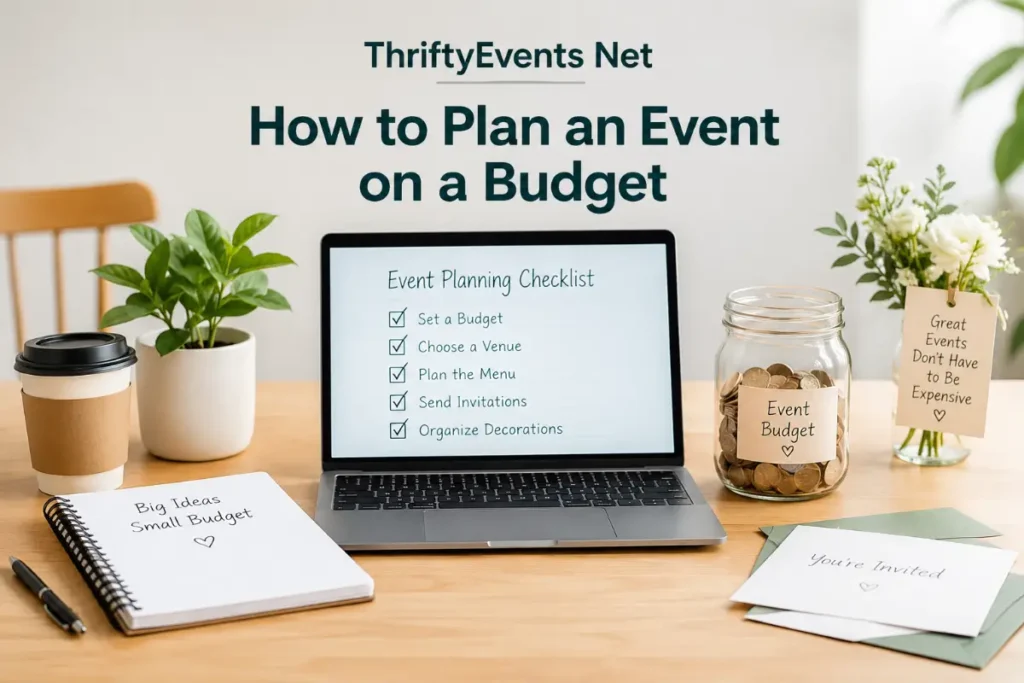
How to Plan an Event on a Budget
A budget friendly event starts with a simple plan. You do not need complicated software or professional planning experience to get organized.
Follow these steps to build an event plan that fits your financial limits.
Step 1: Set a Clear Budget
Decide how much money you can comfortably spend before booking a venue or buying supplies.
Your budget should reflect your actual financial situation, not the amount you think a particular event is supposed to cost. Avoid borrowing money for decorative extras or other items that are not essential to your celebration.
Write down your spending limit and use it to guide every major decision.
For example, if you have $800 for a birthday party, divide that amount among food, decorations, entertainment, supplies, and unexpected costs. Your exact allocations will depend on the event, guest count, and local prices.
Keep your estimates realistic. A plan that relies on unusually low prices may become difficult to follow once you begin contacting vendors.
Step 2: Choose Your Priorities
Make a list of the three things that matter most to you.
For a wedding, these might be good food, meaningful photography, and a comfortable venue. For a child’s birthday party, the priorities could be enjoyable activities, tasty snacks, and a safe environment.
Use these priorities to decide where your money should go.
You can save on less important details without compromising the main purpose of the celebration. Simple decorations may be perfectly suitable if your guests will spend most of their time talking, eating, and enjoying activities.
Step 3: Create a Guest List
The number of guests affects many event expenses. More people usually mean more food, drinks, seating, invitations, and space.
Start with the people you most want to invite. Then estimate the cost per guest for the items that increase with attendance.
For example, reducing a guest list from 60 people to 40 may lower catering costs and make a smaller venue practical. The actual savings will depend on the event and vendor pricing.
Choose a guest count that supports your budget and allows everyone to enjoy the gathering comfortably.
Step 4: Compare Venues
Venue prices can vary considerably by location, date, size, and included services.
Before booking a space, consider options such as:
- Your backyard or home.
- A public park that allows private gatherings.
- A community center.
- A school or university space available for events.
- A local hall or affordable meeting room.
- A restaurant with a suitable group dining area.
Check the rules before making a reservation. Public parks may require permits, and some venues charge additional fees for cleaning, security, equipment, or extended hours.
A low rental price does not always mean the lowest total cost. Compare the full package before making a decision.
Step 5: Plan Food and Drinks
Food can take up a significant portion of an event budget, particularly when you invite a large group.
Start by estimating the number of guests and the type of meal you plan to serve. A casual afternoon gathering may need snacks and drinks rather than a full dinner.
Consider these options:
- Serve a simple menu with a few well chosen dishes.
- Compare catering packages from several local providers.
- Prepare suitable dishes at home when practical.
- Choose seasonal ingredients for homemade meals.
- Offer water and a small selection of other drinks.
- Avoid ordering significantly more food than you expect guests to eat.
For larger events, calculate the full cost of homemade food, including ingredients, serving supplies, transportation, and preparation time. Professional catering may offer better value in some situations.
Step 6: Use Decorations Wisely
Decorations should support the atmosphere of your event without consuming money needed for essential items.
Choose a simple color scheme and use it throughout the space. Reusable tablecloths, inexpensive lighting, flowers, and a few well placed decorative pieces can create a coordinated look.
You can also borrow suitable decorations from friends or family. Reusing items from previous celebrations reduces waste and keeps unnecessary purchases out of your budget.
Step 7: Track Every Expense
Record each purchase and booking in a spreadsheet, notebook, or budgeting app.
Include estimated costs, actual payments, deposits, remaining balances, and payment deadlines. Review the list regularly so you can adjust your plans before spending exceeds your limit.
A budget is most useful when you update it as decisions change.
Step 8: Save Money for Unexpected Costs
Even carefully planned events can involve extra expenses. You may need additional supplies, last minute transportation, replacement decorations, or another table.
Set aside a small contingency fund before spending the rest of your budget. The amount depends on the size and complexity of your event, but even a modest reserve can provide flexibility.
If you do not need the extra money, you can keep it rather than finding something else to buy.

Budget Friendly Event Ideas for Different Occasions
You can apply affordable planning principles to almost any gathering. The best approach depends on your goals, guest count, and available resources.
Birthday Parties
A birthday party can feel special without an expensive venue or elaborate theme.
Host a gathering at home or in a suitable park. Use a homemade banner, prepare a simple snack table, and plan activities that fit the guests’ ages and interests.
For children’s parties, consider games, crafts, music, or a small treasure hunt. For adult birthdays, a potluck meal, board game night, or casual outdoor gathering may work well.
Focus on creating an enjoyable experience rather than buying decorations for every corner of the space.
Weddings and Engagement Parties
Wedding expenses can rise quickly because couples often need to coordinate several vendors.
Start by deciding which parts of the celebration matter most. Compare venues, review catering packages, and consider dates that may offer lower rental prices.
You can save by using seasonal flowers, choosing simple invitations, limiting unnecessary extras, and asking trusted friends or family members to help with selected tasks.
Do not assume that every DIY project will cost less. Wedding tasks can require substantial time, specialized equipment, and careful coordination. Compare the complete costs before committing.
Family Gatherings
Family reunions, holiday meals, and anniversary celebrations often work well in relaxed settings.
A shared meal can reduce costs when guests are comfortable bringing different dishes. A park or community space may provide enough room for children to play and adults to socialize.
Coordinate food contributions in advance so you do not end up with several identical dishes and no essential items.
Corporate Events
Businesses can also benefit from practical event budgeting.
For a small meeting, choose a space that matches the number of attendees rather than paying for a large conference room. Use digital invitations, create a focused agenda, and compare catering options.
Spend money on the details that support the purpose of the event, such as reliable equipment, comfortable seating, or appropriate refreshments.
A professional event does not need excessive decorations or unnecessary extras to make a positive impression.
Community and School Events
Schools, nonprofit groups, and neighborhood organizations often work with limited funds.
Consider donated supplies, volunteer assistance, reusable decorations, and community spaces with reasonable rental rates. Local businesses may also provide sponsorships or discounted services.
Keep records of donations and expenses, and follow the organization’s rules for handling money.
Is ThriftyEvents Net Worth Visiting?
The usefulness of thriftyevents net depends on what you need from an event planning resource.
If you want inspiration for affordable celebrations, budgeting ideas, or DIY projects, a website focused on these subjects can provide a useful starting point. You can explore suggestions, compare them with your own needs, and adapt suitable ideas to your event.
The main advantage is convenience. Instead of starting with a blank page, you can use planning articles to develop a checklist and identify possible ways to reduce expenses.
However, general advice is not a substitute for checking current prices, venue rules, or vendor availability. A suggestion that works for a small family party may not suit a large wedding or business conference.
The website’s published material focuses on informational content. Do not assume that it provides direct booking, verified vendor comparisons, event management software, or guaranteed discounts unless those features are clearly available on the site.
Advantages of Using Budget Planning Resources
A useful event planning resource can help you:
- Discover ideas you may not have considered.
- Organize tasks before the event date.
- Identify expenses that deserve closer attention.
- Explore affordable alternatives to expensive purchases.
- Make more informed decisions about decorations, venues, and food.
- Reduce last minute stress through better preparation.
These benefits depend on how you apply the information. Reading an article is only the first step; comparing prices and following a realistic plan will make a greater difference to your final spending.
Things to Check Before Following Advice
Not every event planning suggestion fits every location or situation.
Check the publication date of an article, confirm important details, and compare recommendations with information from local vendors. Prices, permits, venue policies, and seasonal availability can change.
You should also consider the credibility of specific claims. Look for clear explanations, practical examples, and transparent information about recommended products or services.
For major events, confirm contracts, cancellation terms, payment schedules, insurance requirements, and any relevant permits directly with the responsible provider or local authority.
Practical Tips for Getting Better Results
You can make budget planning easier by following a few simple habits.
Start Early
Give yourself enough time to compare venues, contact vendors, gather supplies, and make changes. Early planning can offer more choices and reduce the pressure to accept expensive last minute options.
Use Free Digital Tools
A spreadsheet can track your budget, while a shared calendar can keep deadlines visible. Digital invitations may also reduce printing and mailing expenses.
Choose tools that solve a real problem rather than spending money on features you do not need.
Ask for Written Quotes
When contacting vendors, request clear estimates that list services, fees, and payment terms. Compare the full cost rather than relying on a starting price.
Ask about setup, delivery, taxes, overtime charges, and cancellation policies when relevant.
Borrow Before Buying
Check what you already own and ask trusted friends or family members about borrowing suitable items. This works particularly well for serving equipment, table decorations, signs, and occasional use supplies.
Make a list of borrowed items and arrange their return after the event.
Keep the Plan Flexible
Your original idea may change as you compare prices. Stay open to alternatives that achieve the same goal for less money.
For example, a community room may work as well as a private venue, or a simple buffet may suit your guests better than a formal meal.
The purpose is to create an enjoyable event that fits your budget, not to follow an expensive plan at all costs.
Common Event Planning Mistakes to Avoid
Even a reasonable budget can fall apart when small decisions add up. Avoiding a few common mistakes can help you stay organized.
Booking before setting a budget: You may commit to an expensive venue before understanding how much money remains for food and other essentials.
Ignoring extra fees: Delivery, cleaning, service charges, taxes, and equipment rentals can increase the final bill.
Inviting more guests than planned: A larger guest list can raise catering and seating costs. Confirm attendance as early as practical.
Buying decorations without a plan: Too many unrelated purchases can waste money and make the event look less coordinated.
Leaving tasks until the last minute: Late purchases and urgent vendor requests can limit your options and increase costs.
Assuming the cheapest option is always best: Poor quality supplies or unreliable services may create additional expenses. Compare value, quality, and reliability before deciding.
Forgetting the guest experience: A visually impressive event may still disappoint guests if there is not enough seating, food, shade, or space.
A successful celebration balances cost, comfort, and the purpose of the gathering.
Frequently Asked Questions
What is thriftyevents net?
It is a search term associated with ThriftyEvents.net, an informational website focused on budget friendly event planning, DIY ideas, and practical budgeting advice. Its stated goal is to help readers explore ways to organize enjoyable events without unnecessary spending.
Is ThriftyEvents.net an event booking service?
The website’s published focus is on event planning information and ideas. Readers should check the current site directly before assuming it offers venue bookings, ticket sales, vendor reservations, or other transactional services.
Can beginners use ThriftyEvents.net?
Yes. Its general focus on accessible planning tips and budgeting ideas may help first time hosts understand the basic steps involved in organizing a celebration. Beginners can start with a guest list, a spending limit, and a simple checklist.
How can I plan an event with limited money?
Set a firm budget, prioritize essential expenses, keep the guest list manageable, compare venue and catering prices, and use affordable decorations. Track every expense and reserve some money for unexpected costs.
Does DIY event planning always save money?
No. DIY projects can reduce costs, but supplies, tools, transportation, and preparation time may make them more expensive than ready made alternatives. Compare the full cost before choosing an approach.
What events can benefit from budget planning?
Birthdays, weddings, engagement parties, family reunions, graduation celebrations, school functions, community gatherings, and business meetings can all benefit from careful budgeting.
How can I check the reliability of event planning advice?
Review the source, check when the information was published, compare prices with current vendor quotes, and confirm important details with the relevant venue or service provider. Never assume a discount or availability claim is guaranteed without verification.
Final Thoughts
Planning a memorable celebration is about making thoughtful choices, not spending the most money. A clear budget, realistic guest list, suitable venue, and well organized checklist can help you create an enjoyable experience without unnecessary financial pressure.
thriftyevents net can serve as a starting point for people looking for budget friendly event planning information, DIY inspiration, and practical ways to organize gatherings. Use the ideas that fit your needs, confirm important details, and compare actual costs before making commitments.
With a little creativity and careful preparation, you can plan a celebration that feels personal, welcoming, and worth remembering while keeping your spending under control.