
If you recently discovered TheSindi.com through Google, social media, or an online article, you may be wondering if the website is genuine or just another questionable platform. That is a reasonable concern. New websites appear regularly, and not every site that publishes professional looking articles deserves your trust.
The question of thesindi.com real or fake deserves a closer look at the website’s identity, publishing history, content quality, ownership information, and transparency.
TheSindi.com is described in online reviews as an independent digital publication covering several subjects, including technology, finance, business, education, health, lifestyle, law, and travel. It appears to operate more like a general information blog than an online store, financial service, or software platform.
Some signs are encouraging. Third party reports describe a website with a publishing history dating back to 2023, publicly accessible articles, and standard website policy pages. Other details deserve more attention, particularly the limited independent information about its ownership and the qualifications of its contributors.
This distinction matters. A website can be real and still publish articles that need fact checking. Similarly, a site can have a professional design without having the editorial standards of an established news organization.
In this review, we will examine what TheSindi.com offers, who reportedly runs it, how its content is presented, and what readers should check before relying on its information.
Quick Answer. Is TheSindi.com Real or Fake?
TheSindi.com appears to be a real informational publishing website rather than an obvious fake shopping platform or payment scam. Third party reports describe an established domain, a history of publishing articles, and standard website policy pages.
However, its ownership and editorial credentials have not been independently established. Its broad subject coverage also means readers should evaluate individual articles carefully.
Verdict: The website appears legitimate as a general reading platform, but that does not automatically make every article accurate or trustworthy. Use it for basic information and verify important health, financial, and legal claims through authoritative sources.
What Is TheSindi.com?
TheSindi.com is described as an independent digital publication that provides informational articles, explainers, guides, and general interest content.
Unlike an ecommerce website, it does not primarily focus on selling physical products. Its main purpose appears to be sharing written information with people interested in different subjects.
According to third party descriptions, the publication began around 2023. Its reported content categories cover several areas of everyday interest.
These include:
- Technology: Digital developments, software, online platforms, and technology related topics.
- Finance: Financial concepts, investment related information, and money management subjects.
- Business: Entrepreneurship, business operations, marketing, and industry developments.
- Education: Learning resources, educational explanations, and general academic subjects.
- Health: General wellness information and health related topics.
- Lifestyle: Everyday interests, practical advice, and personal development.
- Law: General legal explanations and information about regulations.
- Travel: Travel related guides, destinations, and useful information for readers.
The website’s broad coverage makes it suitable for people who enjoy reading about different subjects in one place.
However, this variety also creates an important limitation. A publication that covers technology, medicine, finance, and law needs writers with different areas of knowledge. A general author profile does not establish expertise in all these fields.
For that reason, readers should not assume that every article carries the same level of authority.
The best approach is to consider TheSindi.com a general information resource and examine the evidence behind individual claims.
Quick Facts About TheSindi.com
Here is a snapshot of the information reported about the website.
| Website detail | Available information |
|---|---|
| Website name | TheSindi.com |
| Official address reported | thesindi.com |
| Website category | Digital publication |
| Reported launch year | 2023 |
| Main purpose | Informational articles and guides |
| Content categories | Technology, finance, business, education, health, lifestyle, law, and travel |
| Reported author | Roland or Roland Miller |
| Reading access | Reported to be free |
| Publishing platform | WordPress, according to third party reports |
| Connection | HTTPS reported |
| Ownership | Not independently confirmed |
| Main audience | General online readers |
These details come from third party reports and available website descriptions. They should not all be treated as independently verified facts.
In particular, the reported author name does not establish the legal identity of the website owner.
Is TheSindi.com a Legitimate Website?
A legitimate website should provide a clear purpose, accessible information, consistent branding, and enough transparency for visitors to understand what they are using.
TheSindi.com shows some positive signs based on available third party reviews.
1. It Has an Established Domain History
Several online reviews report that the domain was registered on March 18, 2023. Some also describe an article archive containing posts from 2023 onward.
An established domain history is useful because it gives readers a way to understand how long a website has existed.
However, domain age is not proof of trustworthiness. A domain can change owners, purpose, or management over time. A website that has existed for several years can still publish inaccurate information.
The important point is to look at its publishing history alongside its current content and ownership details.
2. It Publishes Different Types of Articles
TheSindi.com is described as a content publication rather than a website built around one specific product or service.
Its reported articles include general explanations, practical guides, informational posts, and topic based discussions.
This gives readers different subjects to explore without needing to visit multiple websites.
Still, publishing a large number of articles does not automatically demonstrate editorial quality. The sources, author knowledge, accuracy, and usefulness of each article matter much more.
3. It Has Reported Policy Pages
Third party reviews identify several standard policy pages associated with the publication.
These reportedly include:
- About Us
- Privacy Policy
- Terms and Conditions
- Disclaimer
- DMCA Policy
- Editorial Policy
These pages help visitors understand a website’s purpose, privacy practices, content responsibilities, and copyright procedures.
Their presence is a positive transparency signal. However, simply having policy pages does not prove that a website follows every statement written in them.
Readers should check the actual policies and look for clear, consistent information.
4. It Uses an Encrypted Website Connection
Third party reports describe TheSindi.com as using HTTPS.
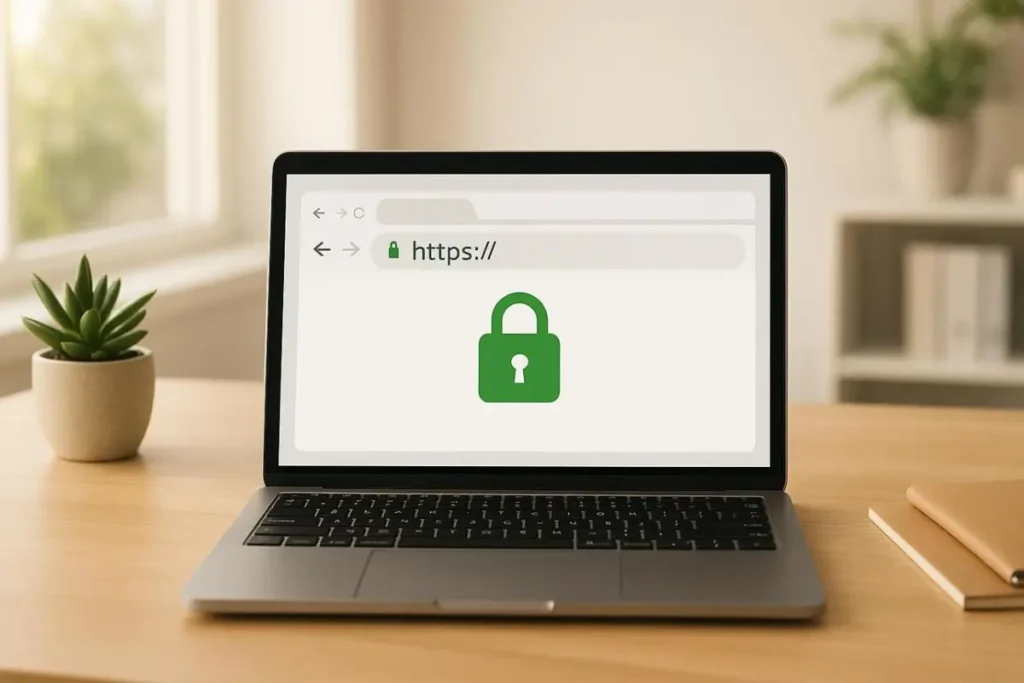
HTTPS helps protect information transferred between a visitor’s browser and a website by encrypting the connection.
You can check this by looking at the browser address bar and confirming that the address begins with https://.
Keep one important point in mind: HTTPS does not certify a website as honest. Scam websites can also use encrypted connections.
It is a basic security feature, not a complete trust certificate.
5. It Appears to Be a Reading Platform
Available descriptions present TheSindi.com as a general information website. It is not primarily described as a platform that requires visitors to purchase a product or subscribe to a paid service.
Several reviewers report that its articles are freely accessible without mandatory registration.
This is useful for casual readers, although access conditions can change. Always check the current website instead of relying entirely on an older review.
Taken together, these observations suggest that TheSindi.com operates as a conventional publishing website. They do not establish that its information is always accurate.

What Does TheSindi.com Publish?
Businesswoman Reading Information On Laptop
TheSindi.com reportedly covers a wide range of topics. Understanding its content categories can help readers decide what to expect from the publication.
Here is a closer look at its main subject areas.
Technology and Digital Information
Technology is one of the reported content categories.
Articles in this area may discuss digital tools, online platforms, software, technology developments, and internet related subjects.
This type of content can help readers understand unfamiliar technology terms or learn about emerging digital services.
For US readers, technology information can be useful when researching an unfamiliar application or trying to understand how a particular online platform works.
However, always check technical recommendations against official product documentation. Software features, subscription prices, privacy policies, and security requirements can change quickly.
Finance and Money Related Topics
Financial content is another reported area of coverage.
Readers may come across articles explaining financial concepts, investment topics, business finance, or general money related information.
These subjects attract considerable interest because people regularly search for ways to manage money and understand financial products.
But financial information requires particular care.
An article explaining a financial term is different from an article recommending a specific investment. Readers should never make investment decisions based entirely on a general blog post.
For more reliable US financial information, consult the Securities and Exchange Commission’s official investor education resource, Investor.gov.
Business and Entrepreneurship
The website also reportedly covers business subjects.
This category may interest small business owners, entrepreneurs, freelancers, and people learning about different industries.
Business articles can explain marketing concepts, operational decisions, entrepreneurship, and general industry developments.
For someone starting a small business in the United States, introductory articles can provide useful background.
However, tax requirements, employment regulations, licensing rules, and business laws vary by state and industry. Check official government resources before making business decisions.
Education and Learning
Educational content is useful for readers who want simple explanations of unfamiliar subjects.
TheSindi.com reportedly includes educational articles and general learning resources.
This category may appeal to students, casual learners, and people looking for introductory explanations.
The value of educational content depends on accuracy and clarity. Readers should look for references, examples, publication dates, and links to established educational institutions when an article discusses important academic information.
Health and Wellness
Health is another reported category.
This subject deserves more caution than ordinary lifestyle reading because incorrect medical information can affect real decisions.
Readers should look for qualified medical authors, reliable references, and links to recognized health organizations.
If an article discusses symptoms, medication, treatment, or a medical condition, do not treat a general publication as a substitute for professional medical guidance.
US readers can use MedlinePlus, a health information service from the National Library of Medicine, for medically reviewed information.
Lifestyle and Travel
Lifestyle and travel articles can help readers explore everyday interests, practical subjects, and travel related information.
These topics are generally suitable for casual browsing.
Still, check the dates on travel guides. Entry requirements, transportation services, accommodation prices, and local rules can change.
A useful article should give readers enough context to understand when its advice applies.
Law and General Legal Information
Legal content is particularly sensitive because laws differ across states and can change over time.
A general explanation may help someone understand a legal term or become familiar with a subject.
It should not replace advice from a licensed attorney.
For example, a legal article about tenant rights in California may not apply to someone renting a home in Texas.
Always confirm important legal information through official state or federal sources.
Who Owns TheSindi.com?
Ownership transparency is one of the most important parts of this investigation.
When visitors use an informational website, they should have some way to identify the people or organization responsible for its content.
Third party reports provide different details about the people associated with TheSindi.com.
Some reviews identify a visible author named Roland. Others report that the About page names Roland Miller as an author and administrator.
However, these details do not independently establish the legal owner of the domain.
There is a difference between an author, an administrator, a publisher, and a legal owner.
- Author: The person credited with writing an article.
- Administrator: Someone who manages the website or its publishing system.
- Publisher: The person or organization responsible for distributing content.
- Domain owner: The individual or organization that holds the domain registration rights.
One person may perform several of these roles, but that should not be assumed without evidence.
What Is Known About the Website’s Team?
Available reports suggest that the publication uses the Roland or Roland Miller byline.
Some third party descriptions also mention an independent editorial team.
However, a complete staff directory and independently verified professional credentials have not been established through the available information.
This does not prove that the publication is fake. Many independent blogs operate with small teams or individual contributors.
Still, greater transparency would help readers understand who is responsible for the information they publish.
Why Does Ownership Matter?
Ownership helps establish accountability.
If a website publishes inaccurate information, readers should have a clear way to contact the responsible publisher and request a correction.
A transparent publication makes it easier to identify:
- Who manages the website.
- Who writes its articles.
- Who reviews sensitive information.
- How readers can report errors.
- Who handles privacy related questions.
TheSindi.com would benefit from making these details easy to verify.
For now, readers should distinguish between its reported author information and independently confirmed ownership.
Is TheSindi.com Safe to Visit?
HTTP to HTTPS Migration: SEO Guide
Based on available third party reports, TheSindi.com appears to function as a standard informational website.
There is no sufficiently established evidence in the reviewed material to label the domain an outright scam or malicious website.
However, that does not amount to a complete technical security audit.
It is important to understand that website safety has several different aspects.
Browser and Connection Safety
HTTPS is a useful starting point.
Before visiting any website, confirm that the domain spelling is correct and that your browser does not display a security warning.
Avoid downloading unexpected files or installing browser extensions simply because an article recommends them.
Personal Information Safety
A general information website should not need your Social Security number, banking password, credit card details, or government identification to let you read an ordinary article.
If an unexpected form requests sensitive information, stop and investigate the reason.
Never provide private information simply because a page looks professional.
Download Safety
Be careful with downloadable files, advertisements, and external links.
A link appearing inside an article does not automatically make the destination trustworthy.
Before downloading anything, check the destination domain and make sure you understand what the file contains.
Use updated security software and your browser’s built in protection.
Payment Safety
TheSindi.com is described primarily as an informational publication rather than an online shopping service.
If you encounter an unexpected payment request, subscription offer, or checkout page, examine it separately.
Confirm that the payment destination belongs to the organization making the offer.
Do not enter payment information on an unfamiliar page without understanding what you are purchasing.
External Links and Advertisements
Online publications sometimes include external references, advertisements, affiliate links, or sponsored content.
These links can take readers to websites operated by other organizations.
Treat each destination as a separate website with its own reputation and privacy practices.
A link appearing on TheSindi.com does not mean the publication guarantees the safety of that external service.
The Main Warning Signs Readers Should Consider
A balanced review should explain the limitations of a website instead of focusing only on its positive features.
TheSindi.com has some encouraging signs, but several areas deserve attention.
1. Limited Ownership Information
The website’s reported author information provides some background, but it does not fully establish the identity of the legal owner or operating company.
Readers may prefer publications that provide a complete editorial team, company information, and clear contact details.
This is an area where TheSindi.com could improve.
2. Broad Subject Coverage
The website covers several unrelated subjects.
Although this gives readers more variety, it can make it harder to establish specialist expertise.
A technology writer may understand software but may not have the medical qualifications needed to write authoritative health advice.
Readers should examine the author’s background and sources before relying on specialized information.
3. Questions About Editorial Standards
Third party reviews provide mixed assessments of the website’s sourcing and editorial transparency.
Some reports describe an editorial policy, while others raise concerns about the availability of verifiable author credentials and original references.
The publication’s reported editorial policy says that writers may use official organizations, academic publications, and industry experts as sources.
That is a positive statement, but readers should check the actual references in individual articles rather than assuming every post follows the same standard.
4. Sponsored and Affiliate Content
Some third party descriptions report that the publication may use affiliate links and sponsored articles.
This is common among online publishers.
Affiliate marketing allows a publisher to earn a commission when a reader purchases something through a qualifying link.
Sponsored content involves payment or another commercial arrangement for publishing promotional material.
Neither practice automatically makes a website fraudulent.
The important issue is disclosure. Readers should be able to recognize promotional content and distinguish it from independent editorial recommendations.
5. Limited Independent Reputation Evidence
The available reviews provide useful background, but they do not establish a large, independently verified customer or reader reputation.
A collection of similar descriptions across review websites should not be mistaken for independent confirmation.
Look for specific evidence, original observations, and credible external references.
For additional context, you can examine these third party reviews:
- ZuloAI’s assessment of TheSindi.com discusses ownership transparency, content quality, and editorial signals.
- TuneBats’ TheSindi.com review discusses its publishing history, authorship, and website details.
- TieUp’s assessment examines the website’s credibility and editorial transparency.
These are independent commentary sources, not official certifications or proof of ownership.
TheSindi.com Compared With Established Information Websites
How does TheSindi.com compare with better established information resources?
The answer depends on the subject you want to research.
| Comparison factor | TheSindi.com | Established specialist resources |
|---|---|---|
| General reading | Suitable for exploration | Suitable |
| Technology explanations | General information | Specialist documentation available |
| Financial education | Verify important claims | Official financial resources available |
| Health information | Requires additional checking | Medically reviewed resources available |
| Legal explanations | Requires additional checking | Official government resources available |
| Ownership transparency | Limited independent confirmation | Varies by publisher |
| Subject expertise | Needs article level evaluation | Often clearly identified |
For US readers, these official resources are useful alternatives for important information.
- Financial information: Investor.gov provides investor education from the US Securities and Exchange Commission.
- Health information: MedlinePlus provides health information through the National Library of Medicine.
- Government information: USA.gov helps readers locate official US government services and information.
- Consumer protection: Federal Trade Commission Consumer Advice provides guidance on online shopping, scams, privacy, and consumer rights.
These resources are particularly helpful when a decision involves money, health, legal rights, or personal information.
How to Check If You Are Visiting the Real TheSindi.com
Another important issue is domain confusion.
Websites sometimes have similar names, and a small spelling difference can take visitors to a completely different destination.
The reported official address is:
**https://www.thesindi.com**
According to a review of the website’s own identity information, the publication identifies the hyphenated domain the-sindi.com and thethesindi.com as unofficial and unaffiliated websites. financewealthtools.com+1
Follow these steps before trusting a website using a similar name.
Step 1. Check the complete domain.
Look carefully at the spelling. The official address reported by the publication uses thesindi.com without a hyphen.
Step 2. Visit the About page.
Look for information about the publication, its history, its writers, and its purpose.
Step 3. Review the Contact page.
Check for a working contact method. A clear correction and feedback process is useful.
Step 4. Read the website policies.
Look at the Privacy Policy, Terms and Conditions, Disclaimer, and Editorial Policy.
Step 5. Check external links.
If an article recommends a service, product, or financial platform, visit its official website independently.
Step 6. Verify important claims.
Search for the same information through government agencies, recognized organizations, and established specialist publications.
These checks help you avoid confusing similar domains and placing too much trust in unsupported claims.
Who Should Use TheSindi.com?
The website may be useful for certain types of readers.
Casual Readers
People who enjoy exploring different subjects may find its broad content categories interesting.
You can use general articles to discover unfamiliar topics and develop a basic understanding before conducting deeper research.
Students and Independent Learners
Students may find introductory explanations useful when exploring new subjects.
However, academic assignments should rely on credible books, research papers, institutional publications, and properly cited primary sources.
Technology Enthusiasts
Readers interested in technology and online developments may use its articles to explore different subjects.
For technical instructions, confirm important details through official documentation.
Small Business Owners
Entrepreneurs may find introductory business and marketing articles useful for generating ideas.
However, do not use general blog content as the final authority for tax filings, contracts, employment requirements, or financial decisions.
People Researching Health and Financial Topics
These readers need additional caution.
TheSindi.com can potentially provide background information, but it should not be the only source used for medical or financial decisions.
Is TheSindi.com Worth Visiting in 2026?
The answer depends on your expectations.
If you want a general website where you can explore articles on technology, business, education, lifestyle, and other subjects, TheSindi.com may be worth exploring.
Its reported publishing history and range of content make it an interesting informational resource.
However, readers looking for expert medical guidance, professional financial recommendations, or legally authoritative information should use more specialized sources.
The biggest consideration is not simply the number of articles available. It is the quality of the information behind those articles.
A trustworthy publication should provide accurate explanations, useful references, identifiable authors, and a clear way to report mistakes.
TheSindi.com has some of the basic characteristics of an established online publication, but its ownership transparency and independently verifiable editorial credentials leave room for improvement.
Final Verdict. thesindi.com real or fake?
Appears to be a real website
After reviewing available third party information, thesindi.com real or fake is a question that deserves a balanced answer.
The evidence points toward a real informational publishing website rather than an obvious fake platform designed solely to collect payments or personal information.
It reportedly has an established domain history, multiple content categories, and standard publishing policies. However, these features do not prove that every article is reliable or that the publisher has independently verified expertise in every subject.
There are also unanswered questions about legal ownership, the editorial team, and the qualifications behind some of its content.
My recommendation is to use TheSindi.com for general reading and introductory research. Check its sources, compare important claims with authoritative publications, and avoid making important decisions based on a single article.
For US readers, official government resources and established specialist publications should remain the primary sources for financial, medical, legal, and consumer protection information.
Overall conclusion: TheSindi.com appears to be a genuine content publication, but it has not established enough independently verified authority to deserve unconditional trust.
Frequently Asked Questions
1. Is TheSindi.com real or fake?
TheSindi.com appears to be a real informational website that publishes articles across different categories. Available reports describe an established domain and a publishing history dating back to 2023. However, its legal ownership and editorial credentials have not been independently confirmed.
2. What is TheSindi.com used for?
TheSindi.com is described as a general information publication. It reportedly covers technology, finance, business, education, health, lifestyle, law, and travel. Readers can explore articles and introductory guides on different subjects.
3. Is TheSindi.com free to use?
Several third party reviews report that its articles are freely accessible without mandatory registration or a subscription. However, website access conditions can change, so check the current site before relying on this information.
4. Who owns TheSindi.com?
The website’s legal owner has not been independently established through the available information. Some reports identify Roland or Roland Miller as an author or administrator. These descriptions do not establish legal ownership.
5. Is TheSindi.com safe for US visitors?
Available reports do not establish that the website is malicious. It appears to operate as a conventional informational publication. Still, visitors should use basic online safety practices, avoid sharing sensitive information, and examine external links before opening them.
6. Does TheSindi.com provide reliable information?
Its articles may offer useful introductory information, but reliability depends on the individual article. Check the author, publication date, references, and supporting evidence before relying on important claims.
7. Is TheSindi.com a news website?
It is described as an independent digital publication covering news related subjects, general information, guides, and explainers. Its reported content is broader than traditional breaking news coverage.
8. Does TheSindi.com have an official contact page?
Third party reviews report that the website has a Contact Us page. They also describe an email contact route, although the availability and current functionality should be checked directly.
9. Is TheSindi.com the same as The-Sindi.com?
No confirmed connection has been established between the two domains. TheSindi.com reportedly identifies the hyphenated version as an unofficial and unaffiliated website. Always check the complete domain before visiting.
10. Should I trust financial and health articles on TheSindi.com?
Treat them as introductory reading rather than professional advice. Verify medical information through recognized health organizations and financial information through official regulatory resources. Consult qualified professionals before making important decisions.
11. Does TheSindi.com publish sponsored articles?
Some third party descriptions report that sponsored content and affiliate links may be used. Readers should look for clear advertising disclosures and distinguish promotional material from independent recommendations.
12. What is the final rating of TheSindi.com?
There is not enough independently verified evidence to assign a reliable numerical trust score. The website appears genuine as a publishing platform, but its ownership transparency and editorial authority need further verification.
Research Sources
The following sources provide additional context for readers who want to investigate the website further.
- FinanceWealthTools for reported website details, policies, and identity information.
- ZuloAI for an independent assessment of editorial transparency and content quality.
- TuneBats for reported publishing activity and author information.
- Slangsmean for research limitations and domain identity considerations.
Editorial note: This review distinguishes between third party reports and independently confirmed information. Website ownership, current access, and editorial practices can change. Readers should verify important details directly before relying on them.
You’re using the free version of ChatGPT. Upgrade for advanced models, better memory, and higher-quality image creation.
Try Plus free