
When you search for information online, you want clear answers without wasting time on confusing explanations. General information websites can help you explore unfamiliar topics, learn new concepts, and discover useful ideas. However, knowing what a website offers and how much you can trust its content matters just as much as finding an answer quickly.
simplifydiggs.com appears to be a general interest publishing website that covers multiple subjects, including technology, business, travel, automotive topics, lifestyle, gaming, and other areas of everyday interest. Rather than functioning as a dedicated software application or online service, it is associated with informational articles that readers can browse to learn about different topics.
This guide explains what the website is, how its content may help readers, what to check before relying on its articles, and how to make smarter decisions when researching information online. It also looks at website credibility, online safety, search visibility, and the difference between a helpful introduction and a fully verified source.
Whether you are a student, a professional, a small business owner, or simply someone who enjoys learning about new subjects, understanding these points can help you get more value from your time online.

What Is SimplifyDiggs.com?
SimplifyDiggs.com is best understood as a multi topic informational website. It brings together articles on different subjects instead of focusing on one narrow industry. Readers can explore individual posts to learn about a concept, understand a product category, or get an introduction to a topic they have not studied before.
The website’s name suggests a simple approach to exploring information. The word “simplify” points toward making ideas easier to understand, while “diggs” suggests exploring subjects in greater detail. However, the name alone does not establish the site’s editorial standards, accuracy, or purpose.
Publicly indexed pages associate the website with a broad range of categories, including technology, automotive subjects, business, travel, lifestyle, finance, entertainment, and gaming. The depth and freshness of information can differ from one category to another, so readers should evaluate individual articles rather than assume every section offers the same level of coverage.
The site is not clearly established as a dedicated productivity app, software platform, or online utility. Readers looking for a particular tool should check the actual website instead of relying on descriptions published elsewhere.
Understanding this distinction helps set realistic expectations. An informational website can introduce a subject, explain basic terminology, and point readers toward useful ideas without replacing specialist advice or official documentation.
What Topics Can You Explore?
One potential advantage of a multi topic website is the ability to explore different interests in one place. Instead of visiting a separate publication for every question, readers can browse several categories and discover subjects they may not have considered before.
Here are some of the subject areas associated with the website.
1. Technology and Digital Tools
Technology changes quickly, and unfamiliar terms can make it difficult for beginners to understand new developments. Articles about software, networking, cybersecurity, cloud computing, and digital tools can provide an introduction before readers move on to more detailed technical resources.
For example, someone researching cloud services might first want to understand what cloud computing means, how providers charge for services, and what features matter when comparing options.
A general explainer can help clarify those questions. However, readers should consult official product documentation for current prices, technical specifications, compatibility requirements, and security instructions.
Technology articles are most useful when they explain concepts clearly, distinguish facts from opinions, and provide sources for claims that require verification.
2. Business and Productivity
Business related content can help readers understand workplace practices, common business terms, planning methods, and everyday professional challenges.
A small business owner might look for ideas about organizing projects, improving communication, or comparing digital services. An office worker might want a straightforward explanation of a business concept before discussing it with colleagues.
Practical articles can make these subjects easier to approach, particularly for beginners.
Still, business advice rarely works the same way for every organization. Company size, available resources, industry rules, and customer needs can all influence the best approach.
Use general recommendations as starting points. Before making an important business decision, consider the specific circumstances and look for evidence that supports the proposed solution.
3. Automotive Information
Automotive content can help readers learn about vehicle features, maintenance, ownership costs, and differences between car models.
Someone considering a new vehicle, for instance, may want to understand fuel economy, routine maintenance, insurance costs, or the features available in different trims.
These subjects are useful to explore before visiting a dealership or speaking with a mechanic.
However, car specifications and ownership costs vary by model, year, location, and driving conditions. A general article may not include every detail relevant to a particular vehicle.
For purchase decisions, check the manufacturer’s documentation, official recall information, independent safety evaluations, and current pricing from reputable sellers.
4. Travel and Everyday Lifestyle
Travel and lifestyle articles can offer inspiration, explain common questions, and help readers identify practical considerations before making plans.
A travel guide might introduce a destination, describe activities, or explain factors to consider when choosing accommodation. Lifestyle content might cover routines, everyday purchases, home related ideas, or personal organization.
These articles can be useful during the early stages of research, when you are trying to understand your options.
Travel information requires extra attention to dates. Entry requirements, transportation schedules, ticket prices, and local rules can change. Confirm these details with official government websites, transportation providers, and destination authorities before booking a trip.
5. Finance and Personal Money Topics
Financial articles can introduce concepts such as budgeting, saving, borrowing, interest rates, and financial planning.
For someone new to personal finance, plain language explanations can make unfamiliar terms easier to understand. They can also help readers prepare more focused questions before speaking with a qualified financial professional.
However, financial information needs careful evaluation because a general recommendation may not fit your income, obligations, goals, or tolerance for risk.
Never rely on a single general interest article to make a major investment, borrowing, or tax decision. Verify important claims through official financial institutions, government agencies, and qualified professionals.
6. Gaming and Entertainment
Gaming and entertainment content can help readers discover new interests, understand gaming terminology, and explore topics related to digital entertainment.
A beginner might want to learn how a game works, understand common strategies, or compare different entertainment options.
The usefulness of this material depends on how current and specific the information is. Game updates, platform features, prices, and availability can change over time.
Readers should check official game pages and platform documentation for current details, especially when purchases, account security, or age restrictions are involved.
How Does the Website Work?
Using a general informational website is usually straightforward. Readers find a page through a search engine, open an article, and review the information provided.
The experience typically involves a few simple steps.
- Open the correct domain. Check the browser address to make sure you have reached the intended website.
- Find a relevant topic. Browse available categories or use the site’s search feature if one is available.
- Choose a useful article. Read the headline and introduction to see if the page addresses your question.
- Review the information. Look for clear explanations, examples, publication dates, and supporting references.
- Verify important details. Compare claims with official or specialist sources before acting on them.
This process helps you use an article for its intended purpose: learning about a subject and deciding what to investigate next.
You should not assume that every page offers the same level of detail or that all information remains current. An article about a basic language concept may stay useful for years, while an article about software pricing or travel requirements may become outdated much sooner.
Is SimplifyDiggs.com Legit and Safe to Use?
A website can be accessible and easy to read without being an authoritative source for every subject. To assess its reliability, examine its content, transparency, technical security, and evidence separately.
When evaluating simplifydiggs.com, avoid relying on broad claims that label the entire website either trustworthy or unsafe without supporting evidence.
Instead, use the following checks.
Check the Website’s Identity
Start by looking for an About page, contact information, publisher details, and author biographies.
These details help you understand who operates a website and who takes responsibility for its content. An author biography may also explain the writer’s experience or relevant qualifications.
If ownership or editorial information is difficult to verify, treat that as a limitation. It does not automatically mean the website is fraudulent, but it makes independent evaluation more important.
Examine the Evidence Behind Articles
A useful article should explain its main claims clearly and provide enough context for readers to assess them.
Look for links to original research, official documentation, reputable publications, or other relevant sources. Open those links when the information matters.
Be careful with statements that use impressive language but offer no evidence. Claims such as “guaranteed results,” “completely safe,” or “the best option for everyone” require strong support.
The quality of a source depends on the evidence it provides, not simply on how confidently it presents its conclusions.
Review Publication and Update Dates
An article’s date can tell you when the information was published or last updated.
This is particularly important for technology, business services, finance, automotive products, and travel. Prices, features, laws, and recommendations can change even when an old article remains available.
Check the original source for current information before making a decision.
If a page does not show a clear date, do not automatically assume its information is current.
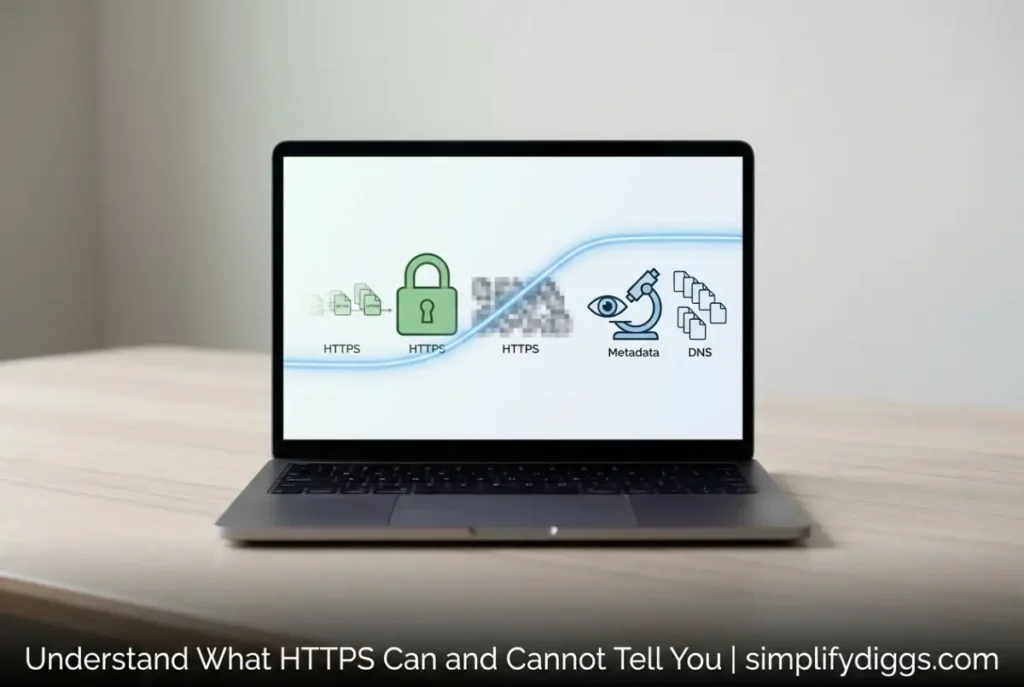
Understand What HTTPS Can and Cannot Tell You
HTTPS helps protect information exchanged between your browser and a website through an encrypted connection. It is an important security feature.
However, HTTPS does not prove that a publisher is honest, its articles are accurate, or its business practices are responsible.
A website can use encryption and still publish incomplete or misleading information. Technical security and editorial credibility are separate questions.
Avoid entering sensitive information unless you understand why the website needs it and have verified that you are dealing with the correct service.
Look for Independent Confirmation
Search for independent information about the publisher when credibility matters.
Pay attention to the quality of the evidence rather than the number of websites repeating the same description. Several articles may repeat an unsupported claim without providing independent confirmation.
Look for verifiable details, specific examples, transparent authorship, and reliable sources.
If important information remains unclear, use the website for general reading rather than treating it as your final authority.
Who Can Benefit From the Website?
A broad informational website may suit readers who want an accessible introduction to unfamiliar subjects.
Students and lifelong learners can use general explanations to understand basic concepts before moving on to textbooks, academic resources, or specialist publications.
Busy professionals may appreciate short introductions that help them understand unfamiliar terminology before a meeting or work discussion.
Small business owners can explore general ideas about productivity, technology, and business practices before researching a specific solution.
Casual readers can browse topics that interest them without committing to a specialized publication.
Early stage researchers can use articles to identify relevant terms, questions, and related subjects for further investigation.
The key is to match the source to your needs. A general article can be a reasonable starting point for low risk learning. A major financial, legal, medical, or technical decision calls for stronger evidence and more specialized guidance.
Advantages and Limitations
Every informational website has strengths and weaknesses. A balanced evaluation considers both instead of assuming that a broad range of topics automatically makes a publication useful.
Potential Advantages
Broad subject coverage: Readers can explore different areas of interest through one publishing platform.
Accessible explanations: Plain language can make unfamiliar topics easier for beginners to understand.
Convenient research: Articles can help readers identify key terms and questions before consulting more detailed resources.
Topic discovery: Browsing different categories may introduce readers to subjects they had not planned to research.
Flexible reading: Informational articles can be useful for casual learning at home, at work, or while planning a project.
These benefits depend on the quality and relevance of each article. A wide category menu alone does not guarantee comprehensive coverage.
Important Limitations
Uneven depth: A general interest publisher may provide more useful coverage of some subjects than others.
Potentially outdated information: Older articles may not reflect current prices, features, rules, or recommendations.
Unclear authorship: Missing or limited author information can make it difficult to evaluate the writer’s expertise.
Limited supporting evidence: An article without reliable sources may be difficult to verify.
Broad rather than specialist coverage: Readers may need more detailed information than a general introduction provides.
These limitations do not automatically make a website useless. They simply mean readers should assess the article itself and understand what it can reasonably support.

How to Get More Value From Online Articles
You can improve your research results by following a consistent process whenever you visit an unfamiliar publishing website.
Start With a Specific Question
Before opening an article, identify what you want to learn.
Instead of searching for general information about cybersecurity, for example, you might ask how two factor authentication protects an account or how to recognize a suspicious email.
Specific questions make it easier to judge the relevance of an article and identify missing information.
Compare More Than One Source
Read another reliable source when a claim matters to your decision.
For technical questions, official documentation may provide the most accurate specifications. For legal requirements, consult the relevant government agency or qualified legal professional. For health questions, look for established medical organizations and appropriate professional advice.
Comparing sources also helps you notice differences in terminology, assumptions, and recommendations.
Distinguish Facts From Opinions
Some articles explain established facts. Others offer recommendations, personal opinions, or predictions.
These forms of information serve different purposes.
A statement about a product’s published specifications should be supported by documentation. A recommendation about the best product for a particular reader should explain the criteria behind the choice.
Recognizing this difference prevents you from treating every sentence as an equally certain claim.
Check the Details Before Taking Action
Do not stop at a broad summary if you need to make a practical decision.
Verify the exact price, date, model number, eligibility requirement, policy, or technical instruction that applies to your situation.
Small differences can change the answer significantly.
Protect Your Personal Information
You should not need to provide unnecessary personal details just to read an ordinary article.
Avoid sharing passwords, financial account information, verification codes, or sensitive documents with unfamiliar websites. Be cautious with unexpected downloads, misleading advertisements, and pages that pressure you into making a quick decision.
A careful browsing routine can reduce risk without preventing you from exploring useful information.
Does SimplifyDiggs.com Help With SEO Research?
Readers who work in digital marketing may also wonder how a multi topic website fits into search engine optimization.
A general publishing site can offer examples of article organization, headline writing, topic selection, and content presentation. Reviewing its pages may help you think about how writers explain concepts and structure information for readers.
However, visiting a website does not reveal its complete SEO performance.
You cannot reliably determine organic traffic, keyword rankings, backlink quality, conversion rates, or search visibility from the domain name alone. Those questions require appropriate data from tools such as Google Search Console, Google Analytics, or reputable SEO platforms, along with access to the relevant information.
For your own website, focus on principles that support long term search performance:
- Answer the reader’s main question early.
- Organize information under clear, descriptive headings.
- Cover related questions naturally instead of repeating the same keyword.
- Support factual claims with reliable sources.
- Keep information accurate and update pages when necessary.
- Make pages easy to read on mobile devices.
- Provide original value rather than rewriting existing articles without adding insight.
Search visibility can bring readers to a page, but useful content gives them a reason to stay, learn, and return.
For website owners, the better goal is to build a trustworthy resource that meets a real need instead of chasing rankings through repetition or unsupported claims.
Frequently Asked Questions
1. What is simplifydiggs.com?
It appears to be a general informational publishing website associated with multiple subjects, including technology, business, automotive topics, travel, lifestyle, and gaming. Readers can use its articles to explore topics and find introductory explanations.
2. Is it a software application?
Available public descriptions identify the domain primarily as a content publishing website, not a dedicated productivity application or software platform. If you are looking for a particular tool, verify its availability directly on the intended domain.
3. Is the website free to visit?
The cost of accessing individual pages and any additional services should be checked directly on the website. Do not assume that every feature or external service mentioned in an article is free.
4. Can I trust its articles?
Assess each article based on its author, evidence, publication date, clarity, and agreement with reliable independent sources. A website’s general appearance or technical security does not prove that every claim is accurate.
5. Does it cover only technology?
No. Publicly indexed references associate the domain with several categories beyond technology, including business, automotive topics, travel, lifestyle, finance, and gaming. The amount and freshness of content may differ across categories.
6. Is it useful for students?
It may help students gain an initial understanding of unfamiliar topics. For assignments that require evidence, academic references, or expert analysis, students should consult textbooks, scholarly publications, official resources, and their instructors’ recommended materials.
7. Can businesses use it for research?
Businesses can explore general articles for introductory information and ideas. Before applying advice to operations, marketing, finances, or compliance, they should verify important claims through sources that fit the specific decision.
8. How can I tell if an article is outdated?
Check its publication and update dates, then compare its claims with current official documentation. This is particularly important for software, product prices, regulations, financial information, and travel requirements.
9. Is the website the same as similarly named domains?
Do not assume that two domains belong to the same organization just because their names look alike. Check the exact web address, publisher information, and official links before sharing information or using a service.
10. Should I use it as my only research source?
For casual reading and basic introductions, a general interest article may be sufficient. For decisions involving money, health, law, safety, or major purchases, verify the relevant details with authoritative sources and qualified professionals when appropriate.
Final Thoughts
SimplifyDiggs.com appears to offer a broad collection of informational content for readers interested in technology, business, automotive subjects, travel, lifestyle, and other everyday topics. Its potential value comes from helping people explore unfamiliar subjects and find a starting point for further research.
The smartest approach is to stay curious while checking the facts. Review the author and publication date, look for reliable supporting evidence, and confirm important claims through official or specialist sources. That way, you can benefit from convenient online information without assuming that every article provides the complete answer.
Tighten repetitive safety guidance