
Digital wall art has become a popular way to personalize homes, offices, creative studios, and commercial spaces. Instead of relying only on traditional paintings or framed photographs, people can now display high resolution digital artwork, change images whenever they want, and create visual displays that match their interior design.
This growing interest has also created confusion around websites that use names associated with digital media and wall art. One example is WallPostMedia.com. Some online descriptions connect the name with premium digital wall art, downloadable artwork, and digital design services.
However, there is an important distinction to understand before exploring the topic.
The actual WallPostMedia.com website appears to be a general interest publishing blog, not a dedicated digital wall art store or design platform. Its homepage displays articles about business, technology, finance, health, and lifestyle. The reviewed pages do not establish an artwork marketplace, digital art library, or wall art creation tool. Wallpostmedia+2
This guide explains the difference, explores what premium digital media wall art means, and helps US readers understand the formats, display options, image quality, costs, and buying considerations involved in digital wall decor.
Quick Answer. What Is WallPostMedia.com?
WallPostMedia.com is a multi topic online publication that features articles about business, technology, finance, health, lifestyle, and other subjects.
Despite descriptions circulating online that associate it with premium digital media wall art, the actual website does not appear to offer a dedicated wall art collection, digital artwork downloads, an art marketplace, or an online design editor.
If you are looking for digital wall art, you should distinguish the website’s publishing activities from the broader digital art market.
The rest of this guide explains both subjects so you can understand what the website offers and how to choose quality digital wall art for your space.
What Premium Digital Media Wall Art Actually Means
Premium digital media wall art refers to high quality visual artwork created or distributed in digital formats for display on screens or printing.
Unlike traditional paintings, digital artwork can be stored as an image file, displayed on a digital frame, or printed on suitable materials.
It gives homeowners more flexibility when decorating a room. You can change a landscape image with the seasons, display abstract artwork in a modern office, or use family photographs to create a personal gallery.
Popular Types of Digital Wall Art
Digital wall art comes in several styles. The best choice depends on the room, display method, and personal taste.
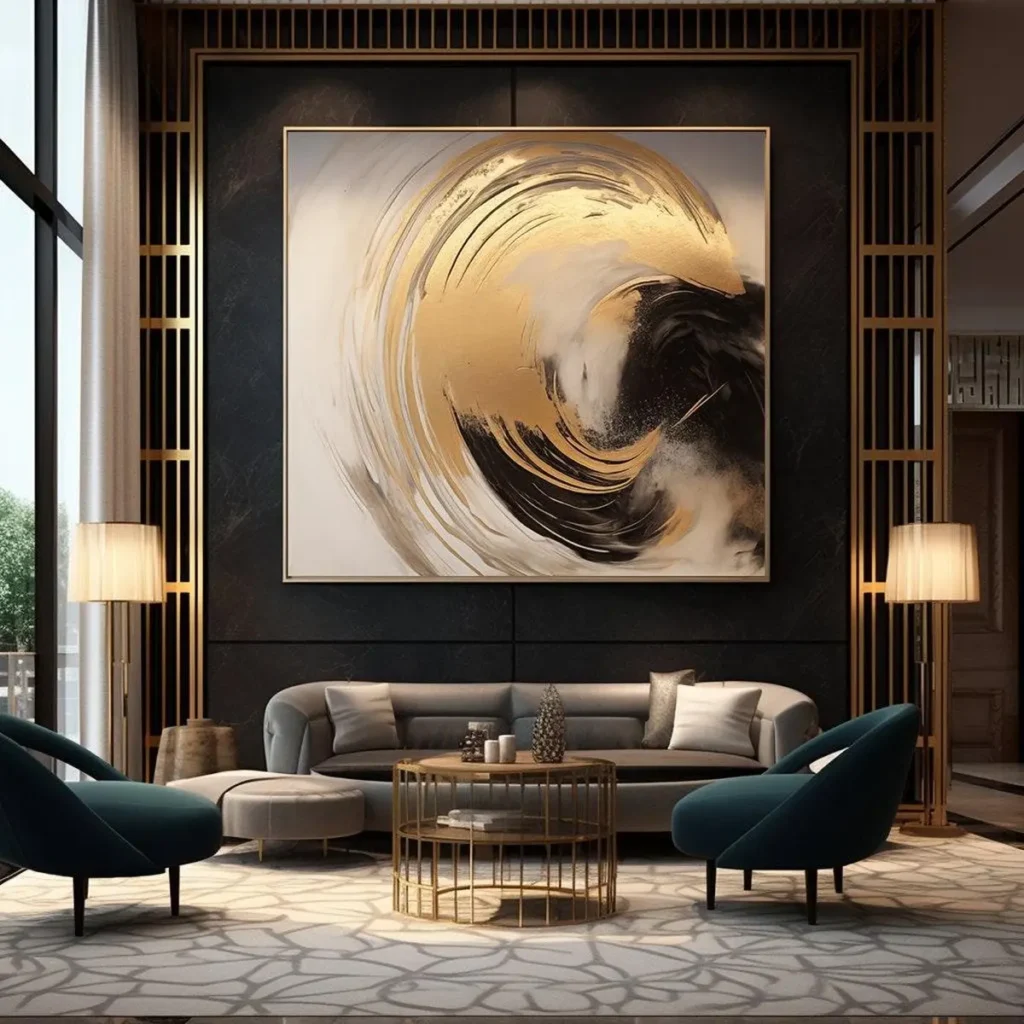
1. Abstract digital artwork
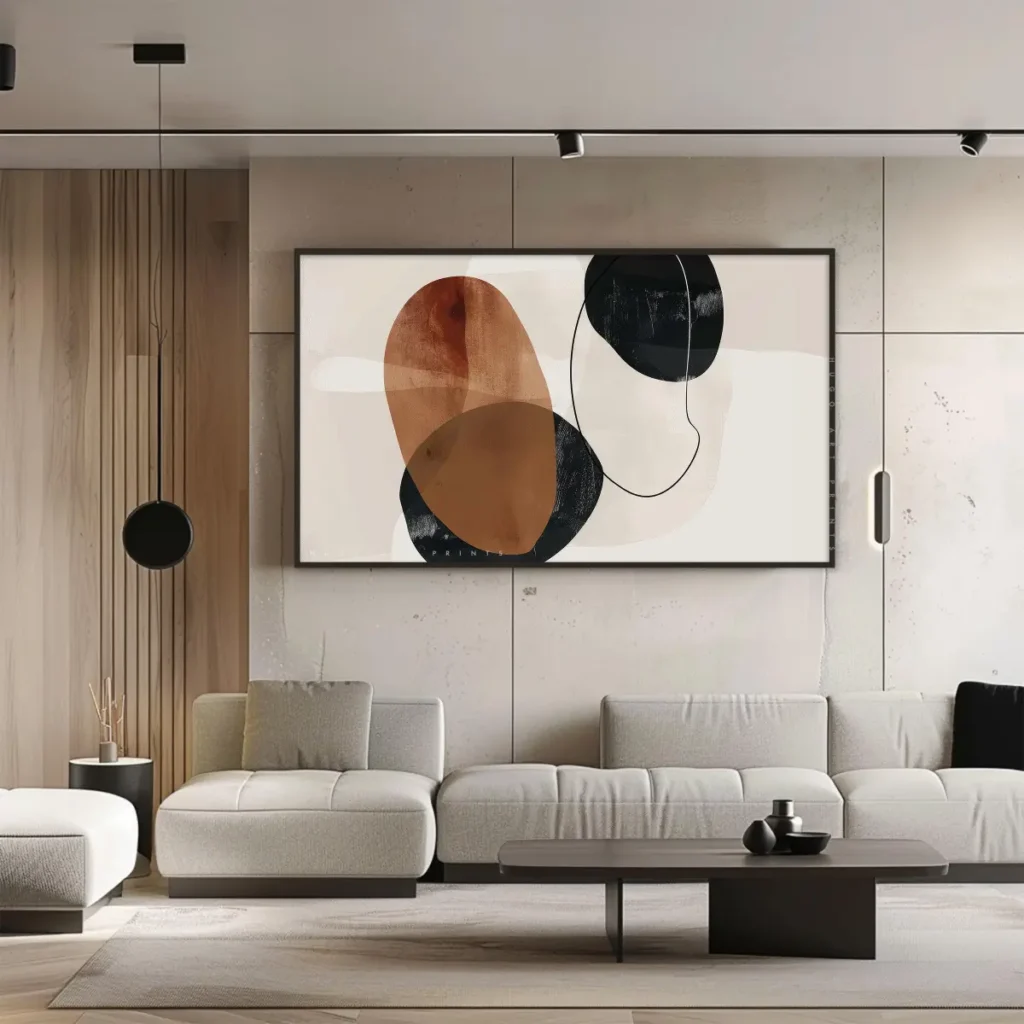
Abstract artwork uses colors, lines, shapes, and textures rather than realistic representations of people or objects.
It works well in contemporary homes, offices, and creative spaces. Neutral abstract designs can complement minimalist furniture, while brighter pieces can become the main visual feature of a room.
2. Nature and landscape artwork
Nature inspired images include mountains, beaches, forests, waterfalls, deserts, and scenic countryside views.
These designs can make a room feel calmer and more connected to the outdoors. They are especially popular in bedrooms, living rooms, and waiting areas.
3. Minimalist digital prints
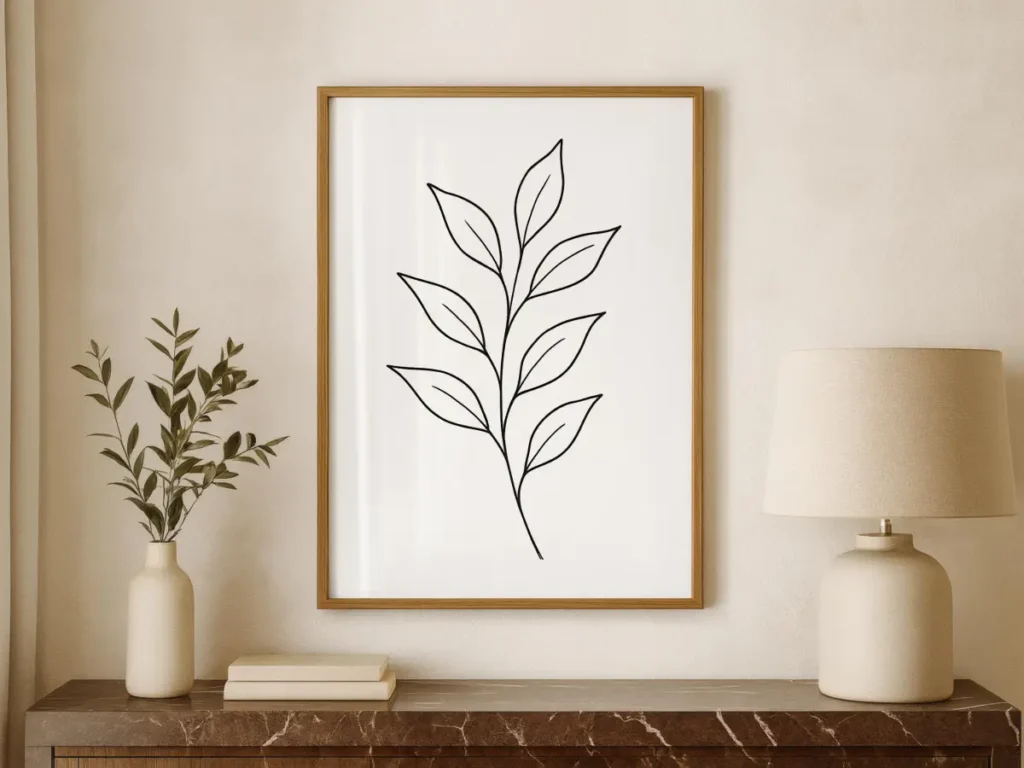
Minimalist artwork uses simple compositions, limited colors, and clean shapes.
It suits smaller apartments and rooms where too many decorative elements might make the space feel crowded.
4. Photography based wall art
High quality digital photographs can turn memorable places, architectural details, city scenes, and natural landscapes into decorative artwork.
Photographic prints work particularly well when the original image has strong composition, sharp details, and suitable resolution.
5. Typography and inspirational artwork
Typography based designs use words, phrases, and lettering as the main visual element.
They are common in home offices, studios, classrooms, and creative workspaces. When choosing this style, check spelling, font quality, readability, and image resolution.
6. Digital illustrations
Illustrations can include hand drawn artwork, digital paintings, character designs, geometric compositions, and stylized scenes.
They offer more variety than conventional photography and can help create a distinctive interior style.

Digital Wall Art Formats and Display Options
A digital artwork file is only one part of the experience. You also need to decide how you want to display it.
Digital Art Frames
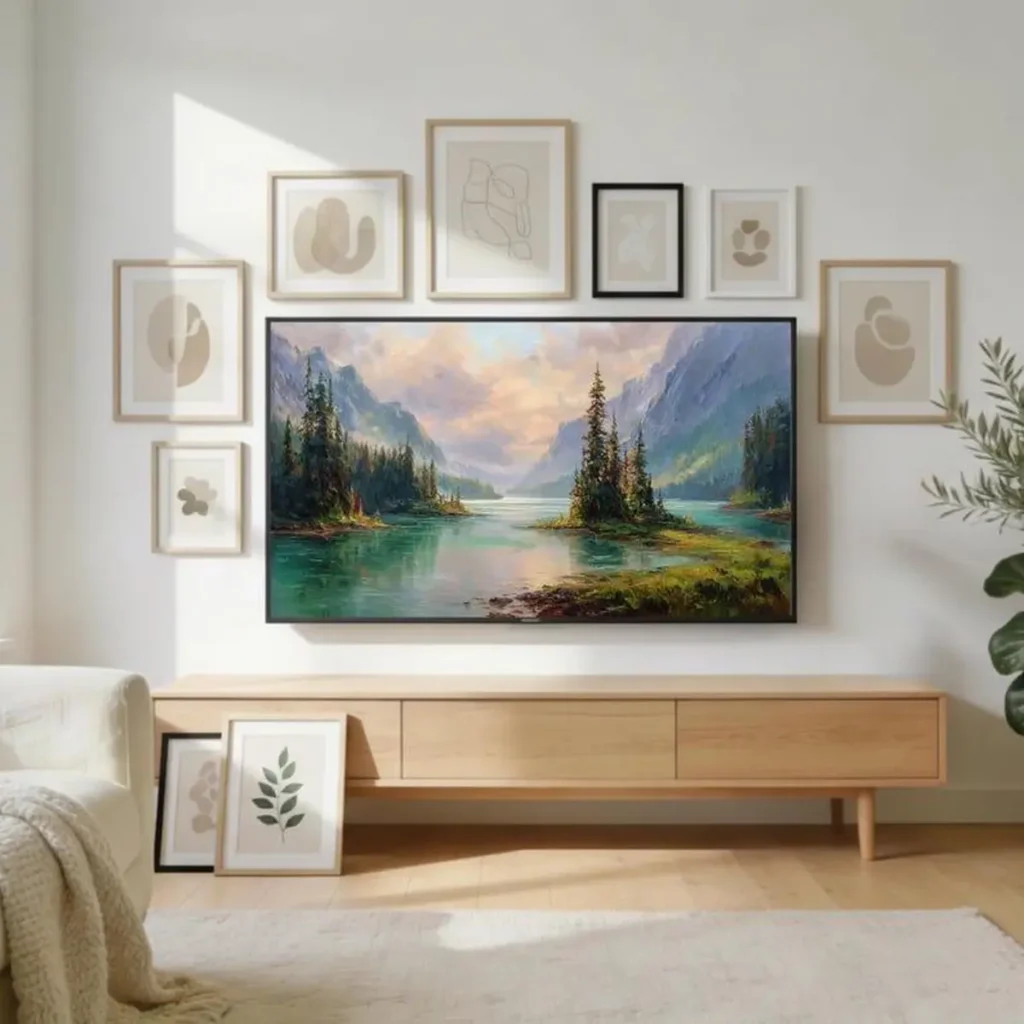
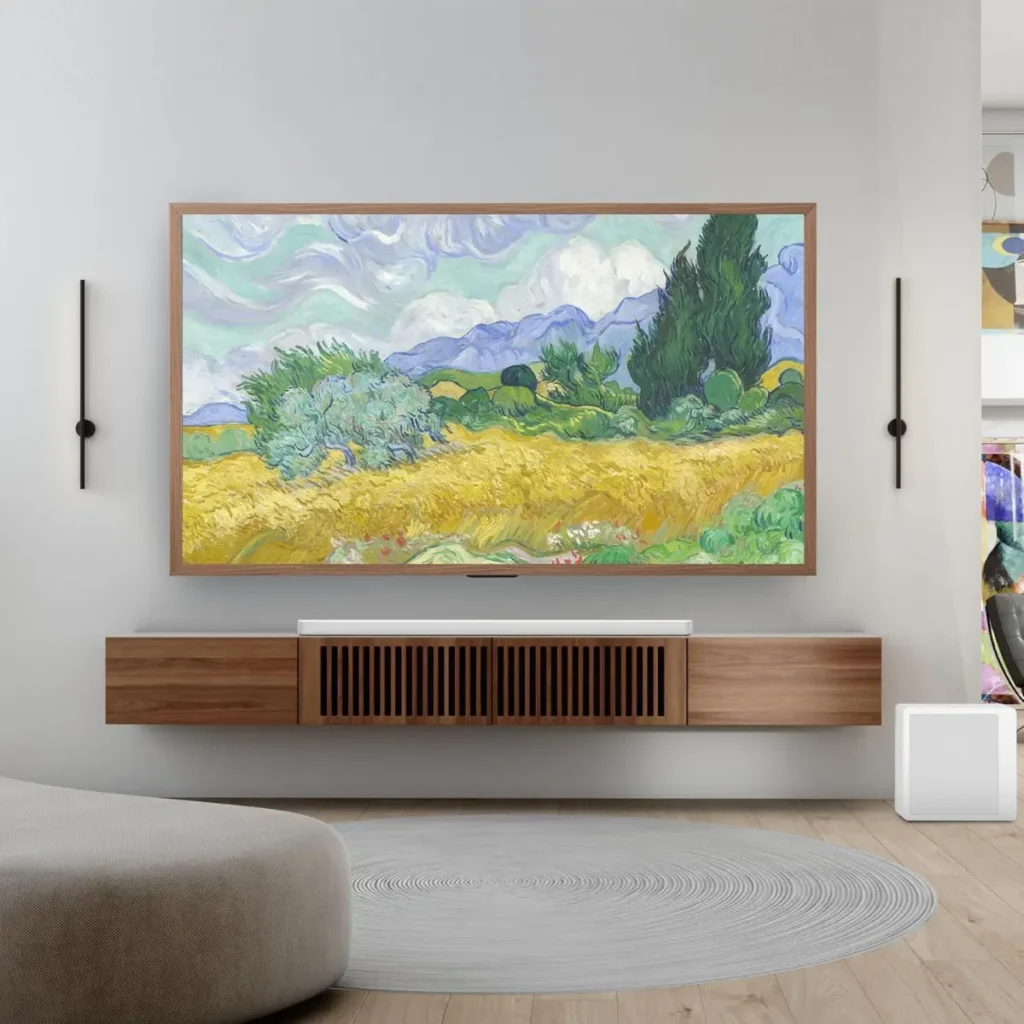
Digital art frames are screens designed to display artwork instead of functioning only as ordinary televisions.
Some models use matte screens to reduce reflections and make displayed images look closer to printed artwork.
Depending on the model, users may be able to upload personal images, select artwork from a library, or connect through a mobile application.
Before purchasing one, check the screen resolution, aspect ratio, brightness, image storage, subscription requirements, and supported file formats.
Smart TVs as Art Displays
A smart television can also display digital artwork.
Many homeowners use televisions to show landscapes, paintings, photography, and decorative images when the screen is not being used for entertainment.
This is often a convenient starting point because you may already own a suitable television.
However, standard television screens can produce reflections, and some models may not reproduce artwork as naturally as dedicated art displays.
Printable Digital Downloads
Printable digital artwork is usually sold as downloadable image files.
After purchasing a file, you can send it to a print service or use a suitable home printer.
Common print options include:
- Matte photo paper.
- Glossy photo paper.
- Canvas.
- Fine art paper.
- Metal prints.
- Acrylic prints.
The quality depends on the original image, printing equipment, paper, and finishing process.
Large Screen Digital Displays
Businesses, hotels, restaurants, and offices may use large commercial displays to present decorative artwork.
These screens can rotate images and support scheduled content changes.
However, commercial displays have different brightness, operating time, mounting, and connectivity requirements from ordinary home televisions.
How to Choose High Quality Digital Wall Art
A beautiful preview image does not always translate into a good looking print or screen display.
Before purchasing or downloading artwork, pay attention to these factors.
Earthy Elegance: A Modern Abstract Palette posters & prints by Marika Barsrsind – Printler
1. Image Resolution
Resolution determines how much visual detail an image contains.
For printed artwork, the required resolution depends on the physical print size and viewing distance.
A small image enlarged to cover a large wall may look blurry or pixelated.
As a general printing guideline, 300 pixels per inch is commonly used for high detail prints viewed relatively close up. Larger wall displays may look good at lower pixel densities because people usually view them from farther away.
For example:
| Print dimensions | Image dimensions at 300 PPI |
|---|---|
| 8 × 10 inches | 2400 × 3000 pixels |
| 11 × 14 inches | 3300 × 4200 pixels |
| 16 × 20 inches | 4800 × 6000 pixels |
| 24 × 36 inches | 7200 × 10800 pixels |
These are reference dimensions, not universal minimum requirements. Always check the printer’s recommendations.
2. File Format
Different file formats serve different purposes.
| Format | Common use |
|---|---|
| JPEG | Photographs and general artwork |
| PNG | Graphics and images requiring transparency |
| TIFF | High quality printing workflows |
| SVG | Vector illustrations and scalable graphics |
| Print ready artwork and documents |
JPEG is convenient for photographs because it produces relatively small files. PNG is useful for illustrations and transparent backgrounds. TIFF is often preferred in professional printing workflows.
For vector artwork, SVG can remain sharp at different sizes, provided the design is compatible with the printing or display software.
3. Color Accuracy
Colors can look different on a phone, computer monitor, television, and printed page.
Screen displays use RGB color, while many printing workflows use CMYK color.
A bright shade on your monitor may appear slightly different after printing.
For expensive artwork, request a sample print or use a professional printer that provides color management guidance.
4. Composition and Aspect Ratio
Aspect ratio describes the relationship between an image’s width and height.
Common ratios include:
- 1:1 for square artwork.
- 3:2 for traditional photographic prints.
- 4:3 for some screens and prints.
- 16:9 for widescreen displays.
- 9:16 for vertical displays.
Choose artwork that fits your frame or screen. Cropping a landscape image into a square frame can remove important details.
5. Originality and Copyright
Digital images are easy to copy, but that does not mean every image is free to use.
An artwork file may be protected by copyright even if it is publicly visible online.
Before downloading or purchasing artwork, check:
- Who created the image.
- Who owns the copyright.
- What license is included.
- If personal printing is permitted.
- If commercial display is allowed.
- If redistribution is prohibited.
A personal use license generally does not give you permission to resell the file, distribute copies, or use it in commercial advertising.
The US Copyright Office provides helpful information through its Copyright Basics guide.
How to Find Premium Digital Wall Art Online
If your goal is to decorate a home or office, you have several options beyond searching for individual image files.
The right source depends on your budget, preferred style, display method, and intended use.
Terracotta Abstract Art Print Set: Boho Modern Decor (digital Download) – Etsy
Ethereal Horizon – Nova Art Labs
Printable Botanical Wall Art. Neutral Leaf Art Set of 3 Prints. – PAPER MOON Art & Design
13
Digital Art Marketplaces
Online art marketplaces allow independent artists and designers to sell downloadable artwork.
You can explore different styles, compare designs, and sometimes communicate directly with creators.
Before purchasing, check the seller’s reviews, image dimensions, file formats, license, and refund conditions.
Independent Artist Websites
Some artists sell digital prints directly through their own websites.
This can be a good option if you want distinctive artwork or prefer supporting individual creators.
Look for a portfolio, clear artist information, original work, and detailed product descriptions.
Print on Demand Services
Print on demand services allow customers to select artwork and order physical products.
Depending on the provider, artwork may be available as framed prints, canvas, posters, or other decorative products.
The advantage is convenience. You do not have to arrange printing and framing separately.
However, shipping costs, print materials, production quality, and return policies can vary.
Photography and Stock Image Libraries
Stock image libraries offer photographs and illustrations that may be licensed for personal or commercial use.
They can be useful when you want a particular subject, such as a city skyline, mountain landscape, or architectural photograph.
Always read the license. A standard stock photo license may have restrictions on resale, redistribution, or certain commercial applications.
How Much Does Premium Digital Wall Art Cost?
The price depends on the artwork, seller, file type, print size, materials, and display equipment.
A downloadable image can cost much less than a professionally framed physical print. A dedicated digital art display requires a larger initial investment.
Here is a general budgeting guide for US shoppers. These are illustrative estimates, not verified prices from WallPostMedia.com or a specific seller.
| Product type | Illustrative price range |
|---|---|
| Basic digital download | $5 to $25 |
| Premium digital download | $20 to $75 |
| Standard printed artwork | $20 to $100 |
| Framed wall art | $75 to $300 |
| Large canvas artwork | $100 to $500+ |
| Digital art display | $300 to $1,500+ |
Actual prices can fall outside these ranges, particularly for original artwork, large prints, and premium display hardware.
What Affects the Price?
Artist reputation: Established artists may charge more for original designs and licensed collections.
Image quality: High resolution files and professionally prepared artwork may cost more.
Printing materials: Canvas, metal, acrylic, and archival paper have different production costs.
Framing: A custom frame can add considerably to the final price.
Usage rights: Commercial licenses may cost more than personal use licenses.
Display technology: Digital frames include hardware, software, and sometimes ongoing subscription costs.
A good buying decision should consider the total cost rather than the initial download price.
How to Display Digital Wall Art in Your Home
The same artwork can look completely different depending on its location, lighting, and frame.
Here are some practical ideas for different rooms.
Big Abstract Wall Art for Modern Homes | Shop Unique Styles
Living Room
The living room is often the best place for a large statement piece.
Choose a design that complements the sofa, rug, furniture, and wall color.
A large landscape or abstract composition can create a focal point without making the room feel crowded.
Bedroom
Bedrooms generally benefit from softer colors and calmer imagery.
Nature photography, minimalist illustrations, and subtle abstract designs can work well above a bed or on a side wall.
Avoid placing a bright digital screen directly opposite your bed if its light might disturb your sleep.
Home Office
A home office offers room for more personal and creative artwork.
You might choose architectural photography, geometric patterns, typography, or motivational illustrations.
If you work on video calls, consider how the artwork appears behind you. A simple design often looks better than a busy background.
Kitchen and Dining Area
Food photography, botanical illustrations, coffee themed artwork, and simple geometric prints can complement kitchen interiors.
Choose materials and display locations that are suitable for areas exposed to moisture, heat, and cooking residue.
Hallways and Entryways
Hallways often have limited space, so vertical prints and smaller digital frames can work better than oversized displays.
A coordinated group of images can also create a gallery wall.
Benefits of Digital Wall Art
Digital artwork offers several advantages over traditional decorative prints.
Easy customization: You can choose designs that match your furniture, color scheme, and personal interests.
Flexible displays: Digital frames and televisions can show different artwork without replacing physical frames.
Space saving: Digital files can be stored on a device instead of occupying physical storage space.
Multiple styles: You can explore photography, illustrations, abstract designs, landscapes, and typography.
Convenient updates: Changing an image can take only a few minutes when your display supports image uploads.
Personal photographs: Family pictures, travel memories, and personal creative work can become part of your home decor.
However, digital displays use electricity and may require internet access, software updates, or subscriptions. Printed artwork avoids those ongoing requirements.
Limitations to Consider Before Buying
Digital wall art is not perfect for every home or buyer.
Screen Reflections
Bright rooms can create reflections on glossy displays. Matte screens may help, but performance varies by model.
Electricity Use
A digital frame or television requires power. Some devices have sleep schedules or energy saving modes, but they still consume electricity when operating.
Subscription Requirements
Some digital art displays include free image options, while others charge for access to premium collections.
Check the terms before purchasing a device.
Image Quality Problems
A low resolution file may look acceptable on a phone but poor on a large screen or printed canvas.
Always check the original image dimensions.
Copyright Restrictions
Buying a digital image does not automatically transfer ownership of the copyright.
Read the license before printing multiple copies, sharing files, or displaying artwork in a business.
Technology Dependence
A digital display can become outdated, lose software support, or develop hardware problems.
Traditional prints do not have these limitations.
How to Avoid Digital Wall Art Shopping Mistakes
Before spending money, use a simple checklist.
Digital wall art buying checklist
0 of 9 completed
0%Confirm the seller and artist are identifiable.Check the original image resolution.Match the artwork to your frame or screen ratio.Read the personal and commercial usage license.Confirm the file format and download method.Review printing materials and finishing options.Check shipping, returns, and refund conditions.Look for genuine customer reviews and product examples.Calculate the total cost, including framing or subscriptions.
Reset checklist
Understanding the Difference Between WallPostMedia.com and Digital Art Platforms
One reason people search for wallpostmedia.com a guide to premium digital media wall art is that the website name sounds connected to digital publishing and visual media.
However, the actual website’s published content tells a different story.
The official homepage describes WallPostMedia as a publication covering business, technology, finance, health, lifestyle, education, and real estate. It also displays three browser based tools:
- Social Post Length Checker.
- Compound Interest Calculator.
- Parcel Volumetric Weight Calculator.
The website offers advertising opportunities, sponsored stories, newsletter placements, and guest contributions. Its advertising page specifically describes its audience as readers interested in business, technology, money, health, and lifestyle. Wallpostmedia+1
It is important not to confuse these publishing services with digital artwork services.
| Feature | WallPostMedia.com | Dedicated digital art platform |
|---|---|---|
| Main purpose | Publishing articles | Selling or displaying artwork |
| Blog content | Yes | Varies |
| Digital art library | Not established | Common |
| Artwork downloads | Not established | Often available |
| Art creation tools | Not established | Some offer them |
| Physical art products | Not established | Some offer them |
| Guest contributions | Advertised | Depends on provider |
The distinction is especially important for people planning to buy artwork or subscribe to a digital display service.
The phrase wallpostmedia.com a guide to premium digital media wall art should therefore be understood as a search topic rather than confirmation that the website provides a premium art collection.
What About Other Websites With Similar Names?
Be careful when searching for the brand. Several websites use similar WallPostMedia names or domain variations.
A similar domain name does not prove that two websites share an owner, products, or services.
Always check the complete web address before submitting information or making a payment. The official domain discussed in this article is wallpostmedia.com.
Frequently Asked Questions
1. What is wallpostmedia.com a guide to premium digital media wall art about?
It is a search phrase connecting WallPostMedia.com with premium digital wall art. However, the actual website is a general interest publishing blog. It does not currently establish itself as a digital art marketplace or artwork download service.
2. Does WallPostMedia.com sell digital wall art?
The reviewed homepage and official pages do not show a dedicated digital wall art store, artwork catalog, or downloadable print collection. Its primary purpose appears to be publishing informational articles.
3. What is premium digital media wall art?
Premium digital media wall art refers to high quality artwork designed for digital screens or professional printing. Examples include abstract illustrations, landscape photography, digital paintings, typography, and decorative graphics.
4. Can I print digital artwork at home?
Yes. You can print compatible digital artwork using a home printer, provided the image has sufficient resolution and the printer supports the required paper size and material. Professional printing services may produce better results for large artwork.
5. What resolution is best for digital wall art?
For detailed prints viewed from a relatively short distance, 300 PPI is a common target. Large wall prints may work well at lower pixel densities. For digital displays, choose an image that matches the screen’s native resolution and aspect ratio.
6. Is digital wall art better than traditional wall art?
Neither option is automatically better. Digital displays offer flexibility and allow you to change images easily. Traditional prints provide a physical finish without electricity or software requirements. Your choice depends on your budget and decorating preferences.
7. Can businesses use digital wall art?
Yes. Offices, hotels, restaurants, retail stores, and other businesses can use digital displays to improve their interiors. However, businesses must obtain the appropriate commercial usage rights for displayed artwork.
8. Is downloadable digital artwork copyrighted?
Most original artwork is protected by copyright unless it falls into a category such as public domain or has another applicable legal status. Buyers should check the license before printing, sharing, modifying, or using an image commercially.
9. Does digital wall art require a subscription?
Not always. Some sellers offer one time purchases, while certain digital frames and art libraries charge monthly or annual subscription fees. Check the pricing terms before choosing a display.
10. Where can I find reliable information about digital artwork?
Look at established art marketplaces, independent artist portfolios, reputable printing companies, and official copyright resources. Compare product quality, image resolution, usage rights, and customer feedback before purchasing.
Final Verdict
Digital wall art offers an interesting way to decorate modern homes and commercial spaces. From abstract prints and beautiful landscapes to photography and digital illustrations, there are plenty of styles to explore.
Choosing the right artwork requires more than finding an attractive picture. Resolution, file format, display compatibility, color accuracy, printing quality, and copyright permissions all matter.
As for WallPostMedia.com, the available website information points to a general interest content publication rather than a premium digital wall art provider. Its articles cover several subjects, and its website includes advertising options, guest contributions, and simple online tools.
My final assessment: Treat WallPostMedia.com as an informational publishing website, not an established digital artwork marketplace. If your goal is to purchase premium digital wall art, look for a dedicated art seller that provides clear product previews, high resolution files, transparent licensing, and reliable customer support.
That distinction will help you find the right source and avoid paying for a service the website does not clearly advertise.