
Investors have plenty of places to find stock ideas, market news, company reports, and investing tips. The hard part is knowing which sources deserve their attention. A website might look professional and offer confident stock ratings, but that doesn’t automatically make its research reliable.
The search term 5starsstocks.com often leads people to questions about stock research, investment ideas, website credibility, and how the platform works. Before relying on any stock related website, it’s worth understanding its purpose, checking its claims, and learning how to verify the information it provides.
For American investors, this matters because investment decisions can affect retirement savings, emergency funds, and long term financial goals. A rating or stock recommendation can be a useful starting point, but it shouldn’t replace careful research.
This guide explains what the website appears to offer, its potential benefits and limitations, the warning signs to watch for, and the practical steps investors can take to protect their money. It also covers reliable research resources and explains how to evaluate stock recommendations without relying on marketing claims alone.
The goal is simple: help readers make informed decisions and understand the difference between a website that shares investment information and a service that provides personalized financial advice.
What Is 5starsstocks com?
5starsstocks com refers to a stock research website that publishes investment related articles, market commentary, stock ideas, and sector focused content. The website presents itself as an educational resource for readers who want to learn about companies, investment styles, and market opportunities. Its public disclaimer states that its content is for general informational purposes rather than personalized financial advice.
5StarsStocks
+1
In practical terms, think of this type of website as a research starting point. It can help you discover companies or investment themes to investigate, but you still need to check the facts before making a financial decision.
For example, an article about technology stocks might introduce companies working on artificial intelligence, cloud computing, or semiconductor manufacturing. A dividend investing guide might explain how businesses distribute profits to shareholders. These topics can help readers identify areas for further research.
However, finding a stock idea and deciding to invest are two different tasks.
A company may operate in a promising industry but still have an expensive share price, weak cash flow, or too much debt. Even a financially healthy business can experience a falling stock price if market expectations change.
What the Website Offers
Based on the website’s published pages and available reviews, its content covers several areas of investing.
5StarsStocks
+1
- Stock research: Articles that discuss companies and possible investment opportunities.
- Sector analysis: Content covering industries such as technology, healthcare, energy, and other market segments.
- Investment styles: Educational material related to growth, value, dividend, and income investing.
- Market commentary: Discussions of market developments and factors that may influence stock prices.
- Investment education: General information intended to help readers understand financial concepts and research stocks.
The depth and usefulness of individual articles may vary. Readers should examine publication dates, supporting evidence, author information, and the sources behind any important claim.
It is also important to distinguish the website’s published features from independently verified capabilities. A description of a research process does not prove that the process produces profitable recommendations.
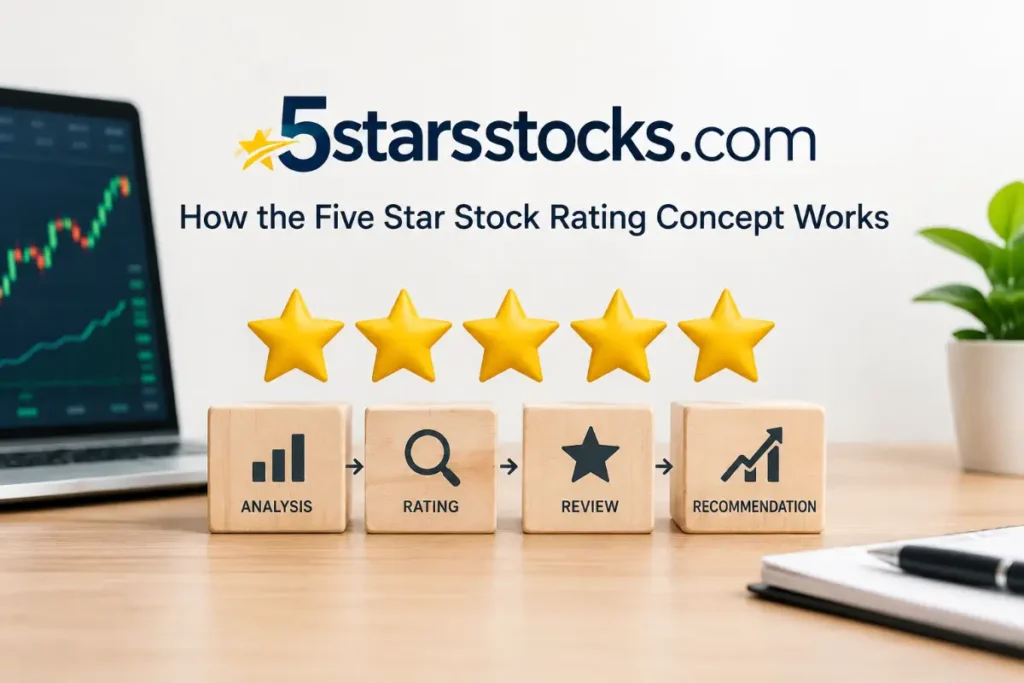
How the Five Star Stock Rating Concept Works
A five star rating system is easy to understand. It assigns a score to an investment based on a set of criteria, with more stars generally indicating a stronger rating under that system.
Investors may find this format convenient because financial research can involve many numbers, reports, and competing opinions. A simple score provides a quick summary.
Still, a rating only helps when readers understand what it measures.
For example, a stock research service might evaluate a company using these factors:
Financial health
Revenue, profit margins, cash flow, debt, and the company’s ability to pay its obligations.
Valuation
The price investors pay compared with earnings, cash flow, assets, or expected growth.
Growth potential
Sales trends, earnings expectations, market demand, and the company’s competitive position.
Market sentiment
Investor expectations, analyst revisions, recent news, and changes in buying or selling interest.
Investment risk
Debt, price volatility, competitive threats, regulatory challenges, and possible business setbacks.
These are useful factors for evaluating stocks in general. However, they should not be mistaken for a confirmed description of a particular website’s complete scoring formula.
An October 2026 independent review reported that it could not verify a current, detailed technical document explaining the site’s rating formula, factor weights, data sources, or long term performance testing.
Perplexityaimagazine.com
That limitation matters. A stock can have excellent revenue growth but poor cash flow. Another may trade at an attractive valuation but face serious competitive threats. A single score can hide these differences.
The key lesson: Treat star ratings as summaries, not proof that a stock is a good purchase.
Main Benefits for Individual Investors
A stock research website can be helpful when it saves time, explains unfamiliar concepts, or introduces investment ideas that readers can investigate independently.
Faster Discovery of Stock Ideas
Finding companies to research can take time. Investors must review industries, financial statements, earnings reports, and economic developments.
A website that organizes articles by sector or investment style can make this first step easier. Someone interested in dividend income, for example, can focus on companies that regularly distribute cash to shareholders.
The benefit is convenience. The next step is checking the quality of each idea.
A Starting Point for Financial Education
New investors often encounter unfamiliar terms such as price to earnings ratio, market capitalization, free cash flow, and dividend yield.
Educational articles can explain these concepts in everyday language. This helps readers understand what financial figures mean and why they matter.
For instance, dividend yield tells investors how much a company’s annual dividend represents as a percentage of its share price. A higher yield may look attractive, but it can also reflect a falling share price or a dividend that the company may struggle to maintain.
Understanding the context is more useful than memorizing a number.
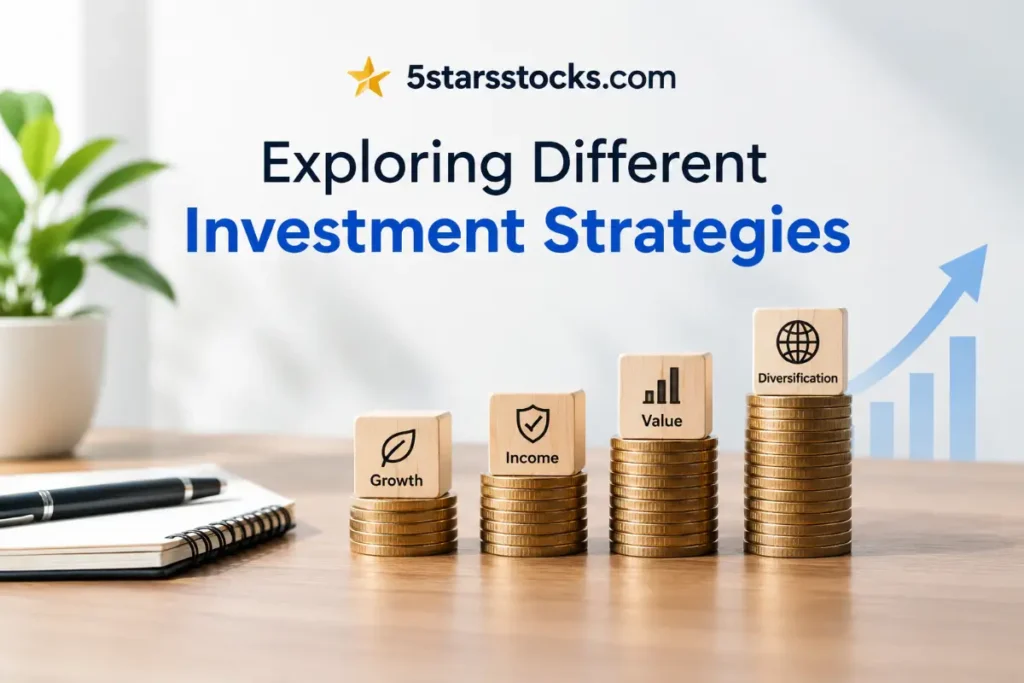
Exploring Different Investment Strategies
Investors have different goals. Some focus on long term growth, while others prefer income producing investments. Some look for undervalued businesses, and others study particular industries.
Sector based and strategy based articles can help readers compare these approaches.
However, a strategy should fit the investor’s goals, time horizon, and ability to handle losses. A person saving for a near term expense may need a different approach from someone investing for retirement decades away.
The SEC’s investor education resource explains the importance of investment goals, risk, and diversification when building a plan.
Investor
A Convenient Research Checklist
Even if an article does not provide a final answer, it can help you identify questions worth asking.
Does the company have consistent earnings? Is its debt manageable? Are competitors gaining market share? Does its share price already reflect optimistic expectations?
Good research encourages these questions instead of encouraging investors to follow a recommendation blindly.
Limitations and Concerns to Consider
The biggest mistake investors can make is assuming that a professional looking website must provide reliable investment guidance.
Presentation and accuracy are separate things. A clean layout, confident language, and attractive rating system cannot establish the quality of the underlying research.
Limited Transparency About Ratings
Readers should be able to understand how a rating is calculated and which information affects it.
If a platform gives a stock five stars, useful supporting details would include the financial measures considered, the date of the analysis, the reasons for the score, and the conditions that could cause the rating to change.
Without that information, it becomes difficult to reproduce the analysis or compare it fairly with other research.
A rating may still help generate ideas, but it should carry less weight when its methodology is unclear.
Unverified Performance Claims
Investment websites sometimes advertise impressive success rates. These numbers deserve careful examination.
An independent review published in October 2026 discussed conflicting claims about the site’s performance and noted that it could not verify the raw recommendation history or the testing method behind the figures.
Perplexityaimagazine.com
A success rate by itself does not tell the full story.
Suppose a service recommends ten stocks. Six rise by 3%, while four fall by 15%. The service has six winning picks out of ten, but the overall result could still be negative if the positions were equally sized.
A proper performance record should explain:
- The date and price of every recommendation.
- The time period used to measure results.
- The rules for buying and selling.
- The effect of fees and trading costs.
- The benchmark used for comparison.
- The average gain, average loss, and largest decline.
Without these details, a claimed accuracy rate cannot tell you how the service might perform in your portfolio.

Market Information Can Become Outdated
Stock prices move throughout the trading day. Company earnings, management decisions, interest rates, and economic reports can change an investment’s outlook.
An article that was useful last month might no longer reflect the current situation.
Before relying on a recommendation, check its publication date and compare its figures with recent company filings and current market data.
General Content Is Not Personalized Advice
A website can explain investment concepts without knowing your income, savings, debt, retirement plans, or tolerance for losses.
That makes a difference because the same investment may suit one person and be unsuitable for another.
The site’s own disclaimer says its material is not personalized financial advice and encourages readers to verify important information independently.
5StarsStocks
For complex decisions, a qualified financial professional can help assess your circumstances and explain the risks involved.
Is 5starsstocks com Legit and Safe to Use?
The most responsible answer is that the website is a real, publicly accessible stock research publisher, but that alone does not establish the reliability of its recommendations or the quality of its investment analysis.
Its published disclaimer identifies the service as a research and educational platform rather than a brokerage or licensed financial advisory firm. It also warns that investments can lose value and that readers should verify important information independently.
5StarsStocks
These disclosures are useful, but they do not establish a verified record of profitable recommendations.
It helps to separate three questions.
| Question | What you should establish |
|---|---|
| Is the website real? | Confirm that you are visiting the intended domain and can identify the publisher. |
| Is the research reliable? | Check its evidence, methodology, publication dates, and historical performance. |
| Is it appropriate for you? | Assess your goals, risk tolerance, costs, and financial situation. |
A website can be real without providing exceptional research. It can also publish useful educational material without being qualified to offer personalized investment advice.
Check the Exact Website Address
Search results may contain articles about a brand, third party reviews, advertisements, or websites with similar names. Do not assume that every result belongs to the same organization.
If you search for 5starsstocks com, check the browser address bar carefully before entering personal information or paying for a service. Look for extra letters, unexpected domain endings, and spelling differences.
Also review the website’s About, Contact, Privacy, Terms, and Disclaimer pages. These pages should help you understand who operates the service, how it handles information, and what it promises to provide.
A contact page alone does not prove that a business is trustworthy. Look for meaningful company information and verify important claims independently.
Look for Evidence of Research Quality
Reliable financial analysis should explain its reasoning. Strong research generally connects conclusions to measurable facts, such as earnings reports, cash flow, company guidance, industry data, or regulatory filings.
Be cautious when an article relies heavily on dramatic predictions without explaining the assumptions behind them.
You should also check if the publisher clearly separates factual information from opinions and discloses relevant financial interests or other potential conflicts.

Be Careful With Payments and Personal Information
Before paying for premium research, understand the total cost, renewal schedule, cancellation process, and refund conditions.
Never share brokerage passwords, banking credentials, or account recovery codes with a stock research website. A service that helps you research stocks should not need unrestricted access to your financial accounts.
If a site promises guaranteed returns or pressures you to invest immediately, step back and verify its claims before proceeding.
No rating system can eliminate the risks of investing in the stock market.
How to Use Stock Research More Effectively
The smartest approach is to treat online research as one part of a larger decision making process.
Here is a practical workflow that US investors can follow.
1
Find a potential investment
Use articles, stock screeners, company news, or sector reports to discover a business that interests you. Do not buy simply because a stock receives a high rating.
2
Review the company’s financial health
Examine revenue, earnings, operating cash flow, debt, and profit margins. Look for trends over several years rather than focusing on one impressive quarter.
3
Check the price
Compare valuation measures with those of similar companies and the business’s own history. A strong company can still be a poor investment at an excessive price.
4
Read the original sources
Review company filings, earnings releases, and official investor relations materials. Check that the facts supporting the recommendation are accurate and current.
5
Assess the downside
Identify what could go wrong, how much you could lose, and how the investment would affect your overall portfolio.
6
Make a decision based on your plan
Invest only if the opportunity fits your goals and risk limits. If you cannot explain why you want to own the stock, spend more time researching it.
This process takes more effort than following a star rating, but it gives you a clearer understanding of the investment and the risks involved.
Reliable Alternatives for Stock Research in the United States
Investors do not need to depend on one website for financial information. Several established resources offer useful tools for checking companies, learning investing basics, and understanding potential risks.
Investor.gov
Best for investing fundamentals and investor protection.
The SEC’s investor education website covers investment risks, diversification, fees, account types, and research methods. It is a strong starting point for beginners.
Investor
FINRA
Best for checking investment professionals and learning about fraud risks.
FINRA provides educational resources, investor protection guidance, and tools for researching financial professionals.
FINRA
SEC EDGAR
Best for original company disclosures.
EDGAR lets investors search public company filings, including annual reports, quarterly reports, and material disclosures. These records help you check claims against the company’s own regulatory filings.
You can combine these resources with a reputable brokerage’s research tools or a financial data service. Each has a different purpose, so the best combination depends on your experience and research needs.
For example, a company article might introduce an interesting business, while its SEC filings reveal rising debt or slowing revenue. Reading both gives you a more balanced view than relying on the article alone.
Who May Benefit From This Type of Website?
A stock research publisher can serve different readers, but its value depends on how they use the information.
| Investor type | Potential value | Best approach |
|---|---|---|
| Beginners | Learn terminology and discover investment ideas. | Verify basic claims and study investing fundamentals. |
| Long term investors | Explore companies and industry trends. | Focus on business quality, valuation, and portfolio fit. |
| Dividend investors | Discover income focused businesses. | Check dividend coverage, cash flow, and payment history. |
| Active traders | Identify topics for additional market research. | Use current market data and a defined risk management plan. |
| Experienced analysts | Find additional viewpoints or research leads. | Compare findings with primary sources and independent analysis. |
Beginners should be especially careful not to confuse simple explanations with complete analysis. A clear article can make an investment concept easier to understand, but it cannot remove uncertainty from the market.
Experienced investors may find value in discovering new companies or comparing ideas. However, they should still assess the source’s accuracy and transparency.
The most useful research tool is one that improves your understanding rather than making decisions on your behalf.
Common Mistakes to Avoid When Reading Stock Recommendations
Even experienced investors can make poor decisions when they move too quickly or rely on incomplete information. Keep these common mistakes in mind.
Buying because a stock has five stars. A high rating does not guarantee future gains. Examine the company’s financial position, valuation, and risks before making a decision.
Ignoring investment fees. Research subscriptions, trading costs, and fund expenses can reduce your overall returns. Compare the cost of a service with the practical value it provides.
Following predictions without checking the date. A recommendation based on old earnings figures may no longer reflect the company’s current position.
Putting too much money into one stock. Concentrating your savings in a single business increases exposure to company specific problems. Diversification can help manage that risk, although it cannot eliminate losses.
Confusing popularity with quality. A company can attract attention on social media while having weak fundamentals. Popularity alone is not a sound investment reason.
Expecting guaranteed profits. Stock prices can fall even when a company’s business appears healthy. Every investment decision involves uncertainty.
The SEC’s investor education resources offer additional guidance on risk management, diversification, and protecting your investments.
Frequently Asked Questions
What is 5starsstocks com used for?
5starsstocks com is associated with a stock research and financial education website that publishes market commentary, investment related articles, and stock ideas. Readers can use this material to identify companies or industries for further research. Its content should be treated as general information rather than personalized financial advice.
Is the website a stock trading platform?
The website describes itself as a research and educational publisher rather than a brokerage. Its public disclaimer does not present it as a service for executing stock trades. Investors who decide to buy or sell shares generally need an appropriate brokerage account.
Can beginners use the website?
Beginners may find stock related articles useful for learning financial terminology and discovering investment ideas. However, new investors should also study basic concepts such as diversification, valuation, investment fees, and risk tolerance. It is important to verify recommendations using company filings and reliable financial sources before risking money.
Are five star stock ratings reliable?
A five star rating is only as useful as the method behind it. Investors should look for a clearly explained scoring system, reliable data, and independently verifiable historical results. A high score alone does not prove that a stock is undervalued or likely to rise.
Does the website guarantee investment returns?
No investor should assume that a stock research website can guarantee returns. The site’s disclaimer acknowledges that market values fluctuate and that investors may lose some or all of their invested capital. Treat promises of guaranteed profits as a serious warning sign and verify any performance claims before trusting them.
What are the best alternatives for stock research?
Investor.gov is useful for learning investing basics and understanding risk. FINRA provides investor protection resources and tools for researching financial professionals. SEC EDGAR provides access to public company filings. Combining these resources can help investors build a more complete picture of a company’s financial health.
Should I pay for a stock research subscription?
Consider paying only after reviewing the service’s features, pricing, cancellation terms, research methodology, and evidence of performance. Compare its benefits with free resources and other services. If the provider cannot explain its recommendations clearly or support its claims with verifiable evidence, spending money on the subscription may not be worthwhile.
Final Verdict
5starsstocks com may be useful as a starting point for discovering investment ideas and exploring financial topics. Its stock related content can help readers identify companies and industries they want to understand better.
However, the presence of stock ratings and research articles does not establish that its recommendations are profitable, independently validated, or appropriate for every investor. Questions about the transparency of its rating methodology and the verification of performance claims deserve attention.
Perplexityaimagazine.com
For US investors, the sensible approach is to use stock research websites alongside official company filings, established investor education resources, and independent financial analysis.
Before acting on any recommendation, understand the company’s financial health, check its valuation, consider the potential losses, and decide how the investment fits your financial goals. If you need help evaluating a decision, consider speaking with a qualified financial professional.
The bottom line: Use stock ratings to generate questions, not to make automatic buying decisions. Good investing depends on evidence, patience, and a clear understanding of risk.